Listen to this article
Read by an AI-generated voice · Report a mispronunciation
Child malnutrition in India tracks caste closely. Children born into Scheduled Caste households, the constitutional category for Dalits, the communities once branded “untouchable,” and into Scheduled Tribe households, the category for Adivasi communities, are stunted and underweight at higher rates than children born into dominant-caste households, even after accounting for household income. That gap is one reason nutrition outcomes function, in demographic research, as a proxy for caste inequality more broadly: they capture something intergenerational and structural that income alone can miss.
What the study found
A paper by Rukmi Pradeep and Srinivas Goli, “The Equalising Effect of Marital Exogamy: Intercaste Marriages and the Reduction of Child Nutrition Inequality in India,” published online in the Journal of International Development on June 22, 2026, tests that proxy against a specific policy question, pooling National Family Health Survey rounds and other government survey data from 2005 to 2021. Does marriage across caste lines, exogamy, narrow the nutrition gap for the children born of those marriages? The paper’s title states its conclusion plainly, an equalising effect, and the finding holds up under the scrutiny that title invites: using Wagstaff’s corrected concentration index alongside panel random-effects and pooled cross-sectional Probit models, Pradeep and Goli find that a one-unit increase in intercaste marriage is associated with a 37 to 43 percent decline in stunting inequality, after adjusting for the income and education controls that might otherwise explain the effect away on their own.
What Ambedkar argued
The question has a long lineage in Ambedkarite thought, and it is worth being precise about which lineage. B.R. Ambedkar argued in Annihilation of Caste that endogamy, marriage confined within caste, is caste’s actual mechanism, the practice that manufactures and re-manufactures the boundary every generation. But Ambedkar himself was blunter about intermarriage’s limits than the popular reading of him allows: “the real method of breaking up the Caste System was not to bring about inter-caste dinners and inter-caste marriages but to destroy the religious notions on which Caste was founded,” he wrote, calling appeals to inter-dining and intermarriage alone “a futile method of achieving the desired end.” Writing in Round Table India, Anshul Kumar has made the same point directly against the popular misreading: Ambedkar’s own remedy was to destroy the Shastras’ religious sanction for caste, not to promote matrimonial reform as an end in itself. He did not dismiss intermarriage itself. In Annihilation of Caste he called it the real remedy, while arguing that Hindus would not take it up until the Shastras lost their hold on them:
“I am convinced that the real remedy is inter-marriage. Fusion of blood can alone create the feeling of being kith and kin, and unless this feeling of kinship, of being kindred, becomes paramount, the separatist feeling—the feeling of being aliens—created by Caste will not vanish.”
— B.R. Ambedkar, Annihilation of Caste (1936), section 20, Columbia University edition
Nearly a century later, this paper asks a narrower, testable version of the question Ambedkar was skeptical of: not whether intermarriage dismantles caste on its own, which he already doubted, but whether it produces a measurable material effect on the bodies of the children born from it.
Why it cannot close the gap alone
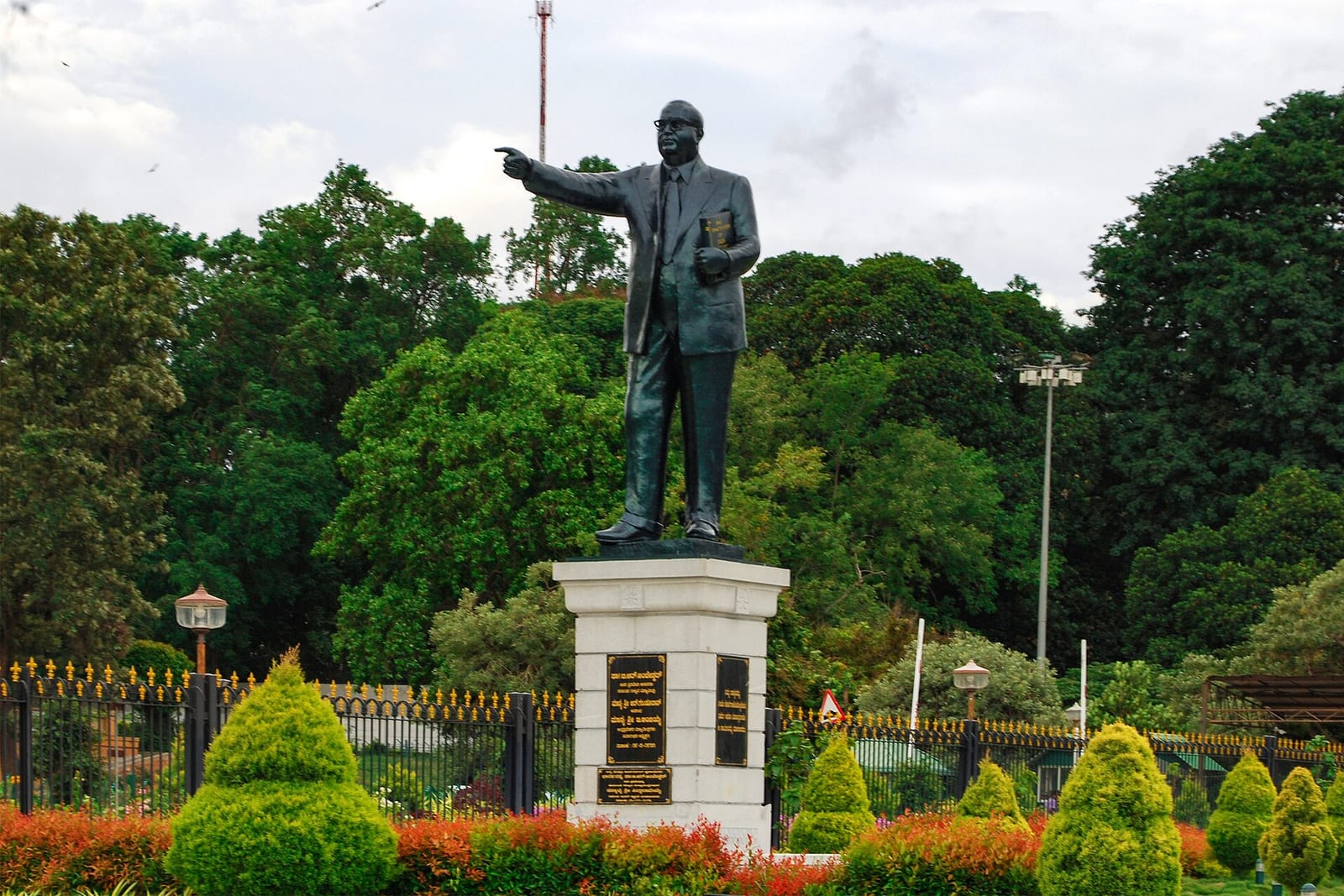
i
CC BY-SA 4.0Original on Wikimedia CommonsEven a robust equalising association does not, on its own, make intermarriage a workable policy lever. Intercaste marriage remains statistically rare across India: national surveys have put the rate at roughly 5 to 6 percent of marriages for decades, with essentially no upward trend, and sharp regional variation. On the broader measure Pradeep and Goli use, couples whose partners reported different caste groups, 14 percent of couples in the National Family Health Survey of 2019-21 married across groups, ranging from 2.2 percent in Meghalaya to 22.3 percent in Karnataka among the states with at least 100 couples in the study’s sample. An association with over a third less nutrition inequality among the households who intermarry says relatively little about the other 94-plus percent of households who do not, and show no sign of doing so at scale. A finding that exogamy narrows nutrition inequality where it occurs is a finding about a mechanism, not a finding about how to close the gap for the country’s children as a whole.
From The Dalit Project Data
A peer-reviewed study of the IHDS puts inter-caste marriages at 5.82% in 2011; another, of the NFHS, finds 14.0% of couples in 2019-21 from different caste groups, a broader measure; an IHDS brief says 95% of marriages take place within caste
What each document reading the India Human Development Survey (IHDS) or the National Family Health Survey (NFHS) says about marriage within and across caste, with who answered and the document’s tier. Figures as each document prints them.
Table of 5 rows from 3 documents: the IHDS research brief, a survey, 95% of marriages within caste; Ray, Roy Chaudhuri and Sahai, a peer-reviewed study, 5.82% of marriages inter-caste in 2011, from IHDS-II; Pradeep and Goli, a peer-reviewed study, couples from different caste groups in the NFHS: 11.8% in 2005-06, 11.2% in 2015-16, 14.0% in 2019-21.
| Document | Tier | Who answered | Marriages within caste | Inter-caste marriages, by the woman’s answer | Couples from different caste groups |
|---|---|---|---|---|---|
| IHDS Research Brief No. 2 (NCAER and University of Maryland) | Survey | 35,145 ever-married women aged 15-49, IHDS-I (2004-05) and IHDS-II (2011-12) | 95% | – | – |
| Ray T, Roy Chaudhuri A and Sahai K, Journal of Economic Behavior and Organization, 2020 | Peer-reviewed study | One ever-married woman aged 15-49 in each household, IHDS-II (2011-12); the rate for 2011 | – | 5.82% | – |
| Pradeep and Goli, Journal of International Development, 2026 | Peer-reviewed study | Couples in NFHS-3 (2005-06) | – | – | 11.8% |
| Pradeep and Goli, Journal of International Development, 2026 | Peer-reviewed study | Couples in NFHS-4 (2015-16) | – | – | 11.2% |
| Pradeep and Goli, Journal of International Development, 2026 | Peer-reviewed study | Couples in NFHS-5 (2019-21) | – | – | 14.0% |
Note: The columns measure different things and are not added up or compared as one series; a dash means the document gives no such figure. Ray, Roy Chaudhuri and Sahai count a marriage as inter-caste when the woman answered no to “Is your husband’s family the same caste as your natal family?”, which the IHDS asks with the word jati: “the question actually uses the word “jati” in Hindi (and its equivalents in all the other eleven languages in which the survey was administered), and not caste.” Pradeep and Goli count couples whose partners reported different caste groups, one of four (Scheduled Castes, Scheduled Tribes, Other Backward Classes and general castes): “As NFHS does not provide direct estimates of intercaste marriages, an indirect estimate of the couples who belong to different caste groups is taken as the indicator of intercaste marriage.” A marriage between two jatis in the same group is not counted, and one between groups is. The brief does not give its question or say which of its two rounds the 95% comes from, and it is a scan, read by eye.
See this chart in Who marries across caste, on The Dalit Project Data
From The Dalit Project Data
In the NFHS 2019-21, as one peer-reviewed study reads it, 14.0% of couples across India were from different caste groups, and more than that in 15 of the 36 States and Union Territories
Couples whose partners reported different caste groups (Scheduled Castes, Scheduled Tribes, Other Backward Classes, general castes), %, in each round of the National Family Health Survey, by State and Union Territory, in the order and regions the study prints them. 160,646 couples, pooled over the three rounds.
Table of 36 States and Union Territories, 2019-21: Chandigarh (few couples) 8.8%; Delhi 19.8%; Haryana 14.7%; Himachal Pradesh 9.2%; Jammu and Kashmir 6.6%; Ladakh (few couples) 2.0%; Punjab 15.3%; Rajasthan 13.6%; Uttarakhand 15.7%; Chhattisgarh 12.0%; Madhya Pradesh 16.0%; Uttar Pradesh 13.7%; Bihar 18.7%; Jharkhand 19.0%; Odisha 15.5%; West Bengal 12.0%; Arunachal Pradesh 9.2%; Assam 12.0%; Manipur 19.5%; Meghalaya 2.2%; Mizoram 4.2%; Nagaland 3.1%; Sikkim (few couples) 27.6%; Tripura 9.6%; Dadra and Nagar Haveli and Daman and Diu (few couples) 20.7%; Goa 6.8%; Gujarat 18.7%; Maharashtra 18.2%; Andaman and Nicobar Islands (few couples) 13.5%; Andhra Pradesh 13.4%; Karnataka 22.3%; Kerala 14.9%; Lakshadweep (few couples) 12.7%; Puducherry 9.3%; Tamil Nadu 6.5%; Telangana 12.1%. All India 14.0%.
| State or Union Territory | Region | 2005-06 | 2015-16 | 2019-21 | Pooled samplecouples |
|---|---|---|---|---|---|
| Chandigarh (few couples) | North | – | 9.7% | 8.8% | 91 |
| Delhi | North | 12.8% | 16.5% | 19.8% | 1,641 |
| Haryana | North | 18.5% | 9.3% | 14.7% | 3,049 |
| Himachal Pradesh | North | 12.8% | 6.4% | 9.2% | 903 |
| Jammu and Kashmir | North | 5.4% | 5.0% | 6.6% | 1,520 |
| Ladakh (few couples) | North | – | – | 2.0% | 8 |
| Punjab | North | 20.7% | 6.4% | 15.3% | 3,138 |
| Rajasthan | North | 3.0% | 10.2% | 13.6% | 8,265 |
| Uttarakhand | North | 13.3% | 10.6% | 15.7% | 942 |
| Chhattisgarh | Central | 3.6% | 6.4% | 12.0% | 3,550 |
| Madhya Pradesh | Central | 4.4% | 13.2% | 16.0% | 9,204 |
| Uttar Pradesh | Central | 11.6% | 9.0% | 13.7% | 24,295 |
| Bihar | East | 6.4% | 13.0% | 18.7% | 9,417 |
| Jharkhand | East | 12.3% | 15.2% | 19.0% | 3,486 |
| Odisha | East | 13.1% | 21.2% | 15.5% | 4,949 |
| West Bengal | East | 9.8% | 10.3% | 12.0% | 12,710 |
| Arunachal Pradesh | Northeast | 8.5% | 9.0% | 9.2% | 127 |
| Assam | Northeast | 13.4% | 7.5% | 12.0% | 3,726 |
| Manipur | Northeast | 13.0% | 12.0% | 19.5% | 315 |
| Meghalaya | Northeast | 4.1% | 1.6% | 2.2% | 298 |
| Mizoram | Northeast | 0.3% | 4.9% | 4.2% | 100 |
| Nagaland | Northeast | 6.9% | 2.2% | 3.1% | 185 |
| Sikkim (few couples) | Northeast | 15.7% | 29.3% | 27.6% | 63 |
| Tripura | Northeast | 16.0% | 8.1% | 9.6% | 540 |
| Dadra and Nagar Haveli and Daman and Diu (few couples) | West | – | 16.7% | 20.7% | 62 |
| Goa | West | 25.8% | 11.9% | 6.8% | 331 |
| Gujarat | West | 15.6% | 19.0% | 18.7% | 9,372 |
| Maharashtra | West | 17.2% | 16.2% | 18.2% | 17,526 |
| Andaman and Nicobar Islands (few couples) | South | – | 35.5% | 13.5% | 39 |
| Andhra Pradesh | South | 9.1% | 11.3% | 13.4% | 10,954 |
| Karnataka | South | 20.3% | 21.9% | 22.3% | 9,591 |
| Kerala | South | 19.7% | 13.3% | 14.9% | 3,689 |
| Lakshadweep (few couples) | South | – | 11.0% | 12.7% | 5 |
| Puducherry | South | – | 4.3% | 9.3% | 141 |
| Tamil Nadu | South | 3.0% | 7.4% | 6.5% | 13,011 |
| Telangana | South | – | 9.1% | 12.1% | 3,403 |
| All India | 11.8% | 11.2% | 14.0% | 160,646 |
Note: A broader measure than a woman’s own report of her husband’s family’s caste: a marriage between two jatis in the same caste group is not counted. The pooled sample of couples is shown for each State; it is under 100 couples for Chandigarh (91), Ladakh (8), Sikkim (63), Dadra and Nagar Haveli and Daman and Diu (62), Andaman and Nicobar Islands (39), Lakshadweep (5), marked “few couples” in the table, so their shares can swing a lot from round to round. The study’s table prints “NA” for a State with no figure in a round and does not say why; it is shown as a dash. The study’s text gives Karnataka 20.2% in 2005-06 (page 911); its table gives 20.3%, which is shown.
See this chart in Who marries across caste, on The Dalit Project Data
What to watch
- The rate. Whether intercaste marriage, roughly 5 to 6 percent of marriages with no upward trend, begins to rise, and where: on the study’s broader measure it ranged from 2.2 percent in Meghalaya to 22.3 percent in Karnataka in 2019-21.
- The gap. Whether the next National Family Health Survey shows the caste gap in child stunting narrowing nationally, which the study’s mechanism alone cannot deliver at today’s rate.
What the study contributes is a check on an assumption reform-minded readers are inclined to want confirmed: that intermarriage helps, materially, the households who undertake it, and helps by a specific, sizable margin rather than a token one. Whether that finding ever travels into a policy case for promoting intermarriage, or stays a more modest claim about a mechanism operating at too small a scale to move national numbers, depends on whether the roughly 6 percent who intermarry can become 60, not on whether the mechanism itself works. On the paper’s own numbers, it does.