Each state built its case on its own commission's evidence after India's Supreme Court allowed the split in 2024. Federal records count Dalits in central jobs, not which Dalit communities hold them.
Three years after Darshan Solanki's death, another Dalit student has died at IIT Bombay, and the institute's first account again centred on the student. Students want many of the same reforms.
Census 2027 asks everyone outside the SC and ST lists to write in a caste. Who sorts those answers, and which Dalits the list leaves out, is still open.
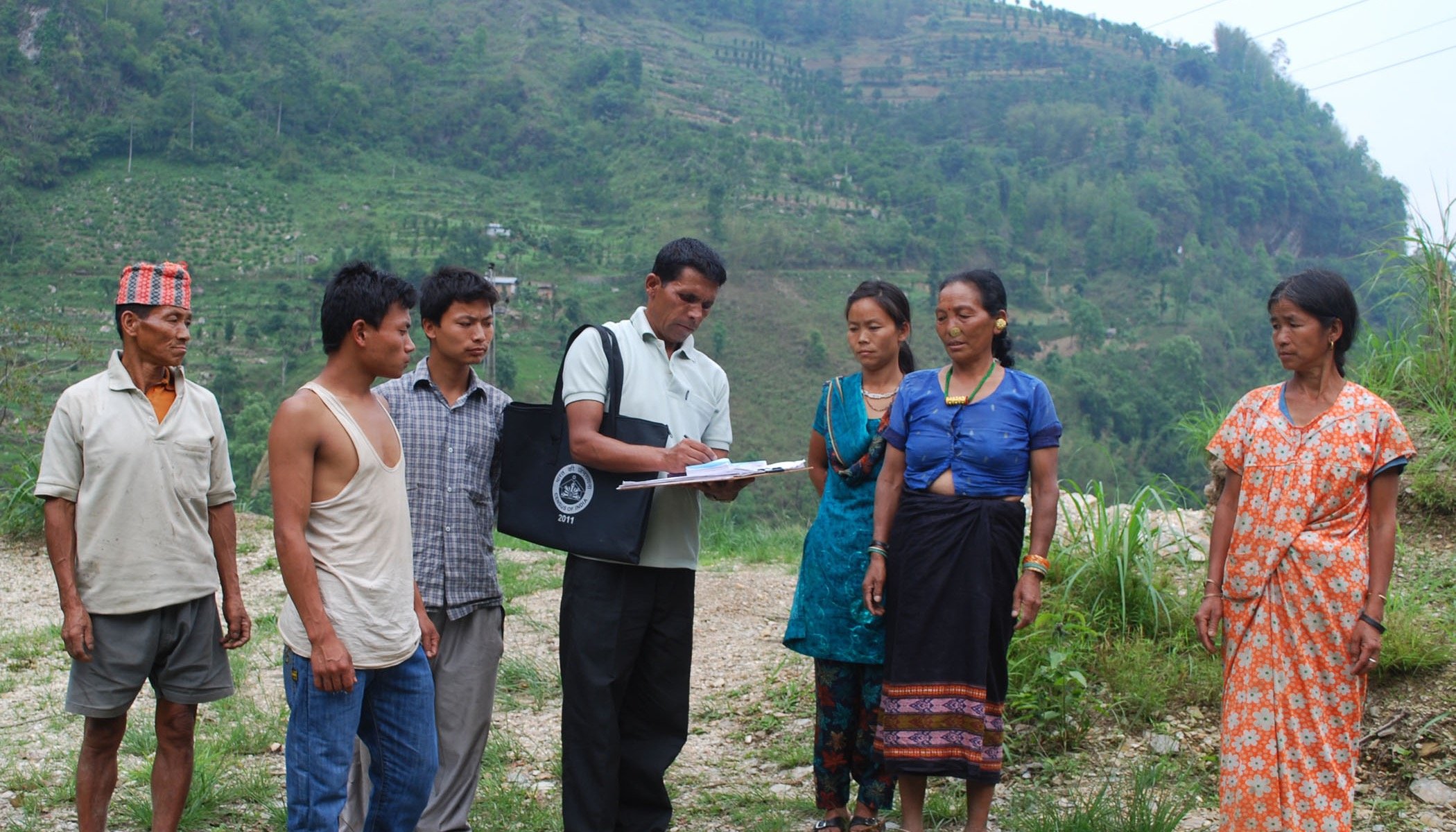
A Census of India 2011 enumerator fills out a household schedule by hand in West Sikkim. File photo. — MoSPI, Government of India, GODL-India
Two opposite designs have one identical outcome: the OBC and the General category [castes outside the quotas] – the population a caste census was revived specifically to make visible – remain, by design, unseen.
India's Scheduled Caste lists are set by presidential order and changed by amending Acts. The Orders and Acts show how the state built the record, and which Dalits it excluded from it.
What can possibly be done is to exclude the economically better SCs from economic concession and various caste-based subsidies but not from job reservation.
Share of federal government posts held by Scheduled Castes on 1 January 2026, against a 15% quota. How those posts divide among the communities on the list is not recorded centrally.
Karnataka raised quotas for Dalits and Adivasis on a case built on population. The court held that the test is adequate representation, and that the State had not shown cause to pass 50%.
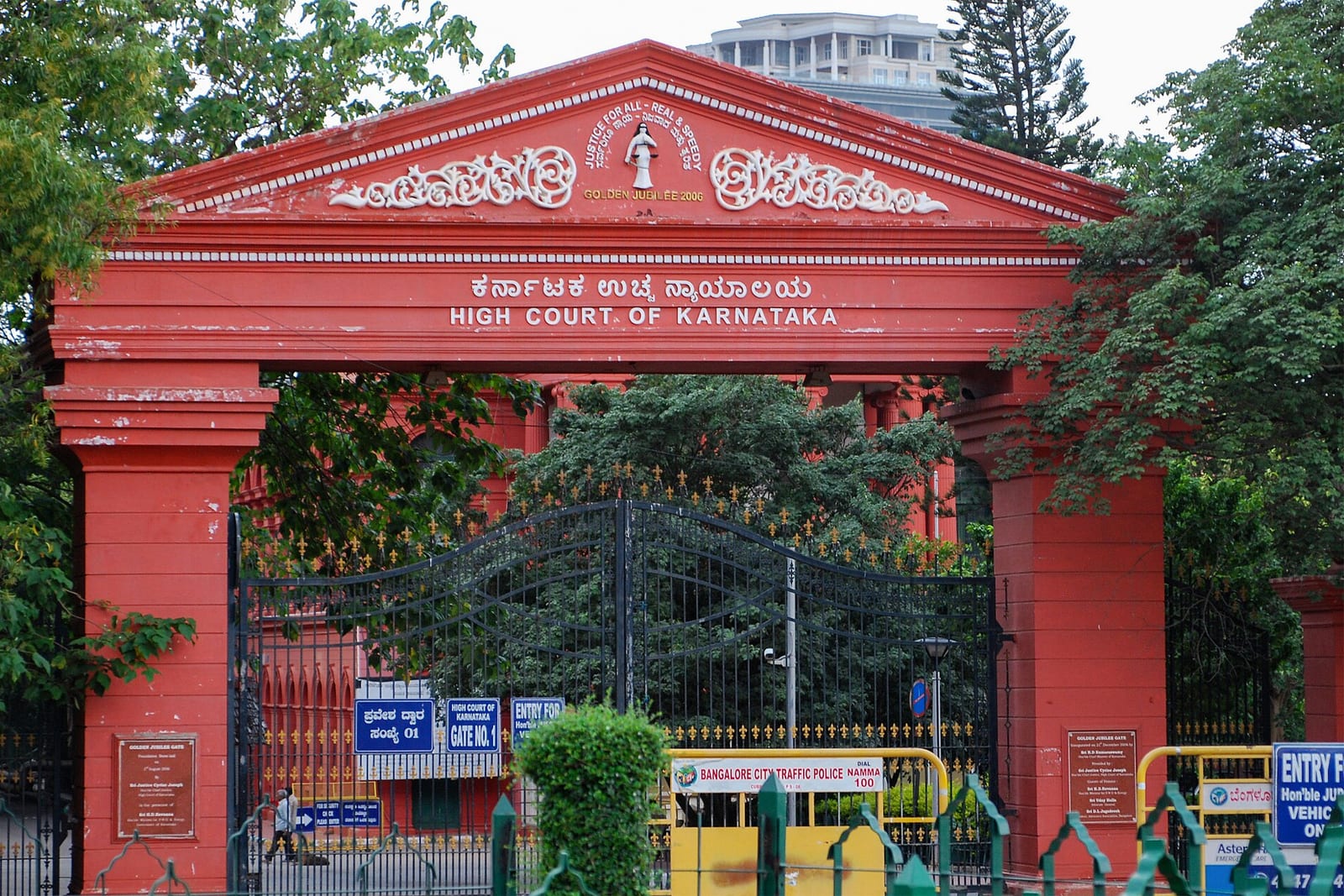
The gate of the High Court of Karnataka in Bengaluru. File photo. — Moheen Reeyad, CC BY-SA 4.0
Politics is at its peak in the bureaucracy and in academia. Interview boards are mostly made up of people from the forward castes, who are prejudiced against non-savarna [not from the dominant castes] candidates. Video recording of interviews should be mandatory.
— Ashok Bharti, chair, National Confederation of Dalit Organisations (NACDOR), to The Quint Hindi, 4 July 2025, our translation
16.59%
Share of Central Government posts held by Scheduled Castes on 1 January 2024, leaving out the Safai Karamchari (sanitation) posts, against 16.6% of India's population in Census 2011.
India's Scheduled Caste lists are set by presidential order and changed by amending Acts. The Orders and Acts show how the state built the record, and which Dalits it excluded from it.
India's Supreme Court upheld the quashing of a Tamil Nadu order for converts to Islam. Its reasons reach Dalits who convert to any religion it places outside the Hindu social order.
Karnataka raised quotas for Dalits and Adivasis on a case built on population. The court held that the test is adequate representation, and that the State had not shown cause to pass 50%.
In 2007 a federal commission said India should stop sorting Dalits by religion and open the Scheduled Caste list to Christians and Muslims. Its case has held up better than the objections.
Shankersinh Vaghela dared reservation's opponents to clean excreta for Rs 50,000 (about US$570) a month. The BJP's reply, that the practice is gone, echoes an official definition the dead don't fit.
Each state built its case on its own commission's evidence after India's Supreme Court allowed the split in 2024. Federal records count Dalits in central jobs, not which Dalit communities hold them.
Census 2027 asks everyone outside the SC and ST lists to write in a caste. Who sorts those answers, and which Dalits the list leaves out, is still open.
The complaint that reservation crushes merit pictures a vast quota. Government records show a small, shrinking public sector, SC shares that track the population and a private sector no one counts.
The Supreme Court froze the 2026 campus equity rules, but the 2012 rules, anti-ragging rules and the Atrocities Act still apply. What each gives you, and where to complain.
Dalit seats follow the Scheduled Caste count and a freeze that lifts after this census, not the new caste question. What else the count changes depends on what the state publishes.
When the Cockroach Janta Party's founder said he was Dalit, replies on X called him "against Merit". The same argument ran through India's year, from campus rules to an exam scandal.
A 2024 court ruling struck down OBC classifications made in 2010–2012 and called for a fresh, commission-led study. West Bengal's new BJP government restored the pre-2010 list before that study began.
Oxfam India and Newslaundry's 2022 count found general-category journalists in 191 of 218 leadership posts. Dalit journalists who built their own newsrooms explain what that does to the news.
The Supreme Court has again refused Scheduled Caste status to Christian converts. The 1950 clause it enforces would, on its letter, have excluded Ambedkar himself when he converted.
Tenants became owners. Dalit labourers, kept out of tenancy by caste, got homestead plots of ten cents at most, and many families are still waiting for land.
On 1 April 2021, 2,389 of the 5,737 posts reserved for Dalits in India's 45 central universities, and 1,199 of the 3,097 reserved for Adivasis, were vacant, the education ministry told Parliament. Parliament's committee on Scheduled Caste and Scheduled Tribe welfare, examining faculty hiring at the All India Institute of Medical Sciences in New Delhi in 2022 and the University of Allahabad in 2025, refused the government's shortage explanation and pointed to selection panels that declare candidates unsuitable.