Listen to this article
Read by an AI-generated voice · Report a mispronunciation
When Anthony Poola was a boy in a village in what is now the southern Indian state of Andhra Pradesh, his family’s house stood at its northern edge. “Our houses used to be at the north end of the village to the corner of the village,” he told Vatican News, the Holy See’s news service, in June 2022. The family was Dalit, from among the communities once branded “untouchable” under South Asia’s caste order. When the children went among what he called “the higher caste people” and were thirsty, there was a well. “When we are thirsty, they will pour in our hand, and we have to drink water,” he said.
He did not tell it as a story of anger. “But that didn’t make me tired and wasn’t painful,” he went on. “We accepted that social stigma.”
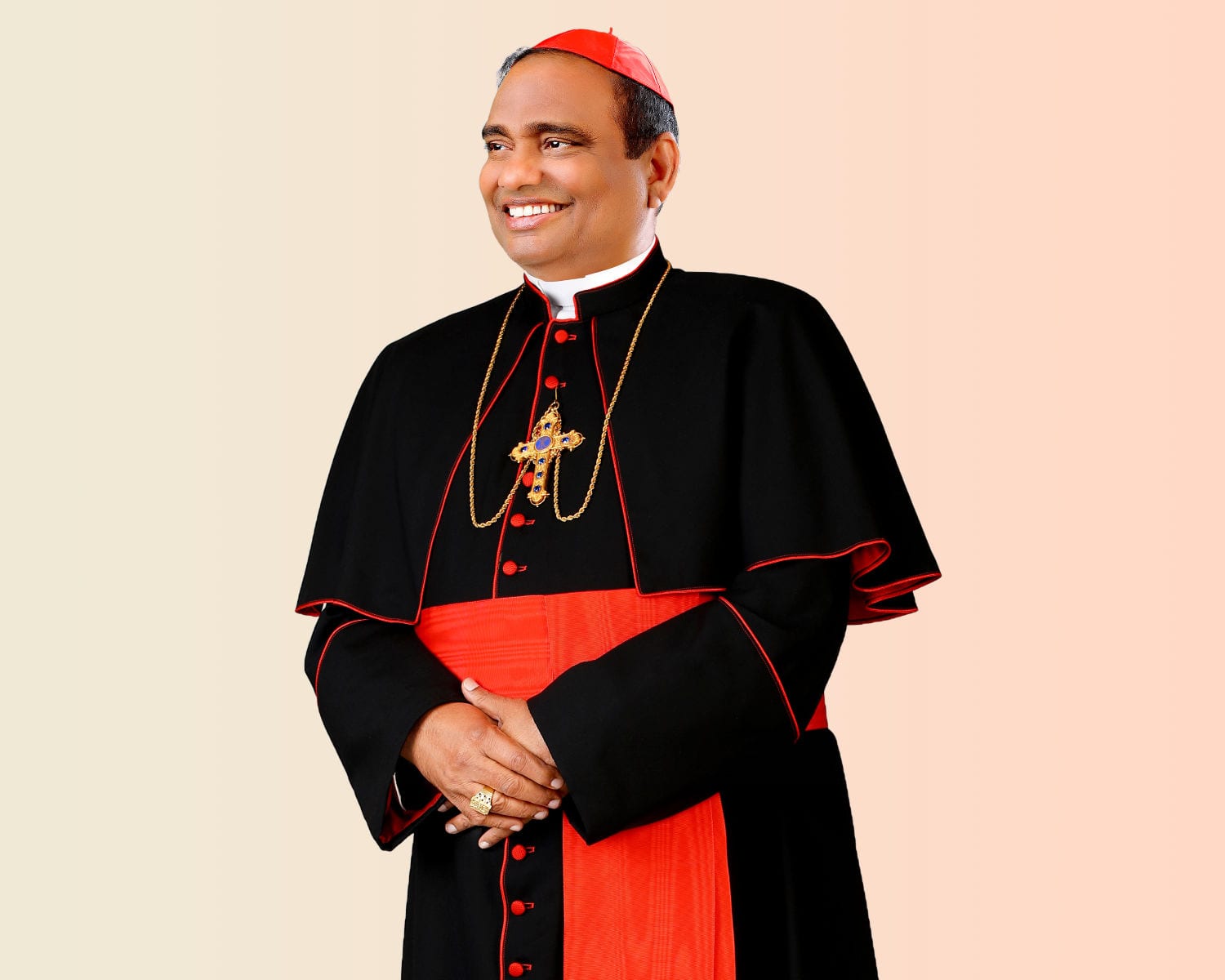
That August, Pope Francis made him a cardinal, the first Dalit in the Catholic Church’s history to hold the rank. On 7 February 2026, India’s bishops went further. Meeting in Bengaluru, they elected him president of the Catholic Bishops’ Conference of India (CBCI), the national body of the country’s Catholic bishops, by secret ballot, Crux reported. He is the first Dalit to lead it.
Why now
The election made Poola, at 64, the public face of a Church in which most of the faithful are Dalit and most of the bishops are not. “Out of roughly 180 bishops nationwide across all rites, only about 12 are Dalit, a stark 6.7 percent,” John Dayal, spokesperson for the All India Catholic Union, a national Catholic lay body, told UCA News after the vote.
The conference he now leads covers bishops of India’s three Catholic rites: the Latin Church and the Syro-Malabar and Syro-Malankara churches, UCA News reported. He succeeded Archbishop Andrews Thazhath of Trichur, a Syro-Malabar bishop who had held the post for four years.
Bishop Sarat Chandra Nayak of Berhampur, who chairs the conference’s office for Scheduled Castes and Scheduled Tribes, read the vote as a message. “Bishops have sent a clear and prophetic message to those who still have the tail of casteism with them (both perpetrators and victims),” he told Crux, “that Dalits and Tribals can be leaders in the Church at all levels.” Scheduled Castes and Scheduled Tribes are India’s official categories for Dalit and Adivasi (Indigenous) communities.
Poola’s own first message was quieter. “I receive this office with humility,” he said, “conscious that leadership in the Church is a service rooted in listening, prayer, and shared discernment.” He added: “In a time marked by division, violence, and growing social tensions, the Church is called to be a sign of reconciliation, dialogue, and hope,” Crux reported.
Chindhukur, and a break after Class 7
Poola was born on 15 November 1961 in Poluru, in the Diocese of Kurnool, the Holy See Press Office records. The Archdiocese of Hyderabad’s biography names the village as Chindhukur, in Poluru parish, and writes his name surname first, as Poola Anthony. He was born into a Dalit Catholic family, the US-based National Catholic Register reported in 2022.
His schooling stopped early. “After seventh grade I had to take a break because of poverty. I thought that is the end of my education,” he told Vatican News. The archdiocese’s record of his schooling shows the gap: upper primary school in the village of Gadivemula until 1975, then St Mary’s High School in Kurnool town from 1977. What brought him back, he said, was the Church. “But it was mainly missionaries who took interest and brought me to Kadapa and helped me go for education,” he said. “That is the reason why I want to join the seminary.”
He entered the seminary in 1979, took a commerce degree in Kurnool, and studied philosophy and theology at St Peter’s Pontifical Seminary in Bangalore, now Bengaluru, the archdiocese’s biography says. He was ordained a priest for the neighbouring Diocese of Cuddapah, now Kadapa, on 20 February 1992, the Holy See Press Office records.
For the next decade he was a village priest. He served parishes in Tekurpet, Badvel and Veerapalli, and ran boarding homes for children, the archdiocese’s biography lists. In 2001 he went to the United States, first as a resident priest at St Joseph’s in the Diocese of Kalamazoo and then as an associate pastor at St Genevieve parish in Chicago, while taking a course in religion and theological engagement at Loyola University Chicago, the archdiocese records. Back in Kadapa he ran the diocese’s child sponsorship programme and helped manage its schools.
He described that work as a direct answer to his own childhood. “I studied and my intention was to help as many poor children as possible,” he told Vatican News. As a parish priest, he said, he would take poor children to boarding homes in his own car. Of the poor families he served through the sponsorship programme: “Some 90% of them are Dalit, marginalized.”
The bishop who writes songs
On 8 February 2008 Pope Benedict XVI named him bishop of Kurnool, the diocese he was born in, and he was consecrated on 19 April, the Vatican records. The motto he chose was “Good News to the Poor”.
The archdiocese’s account of his twelve years in Kurnool reads like a builder’s ledger: 11 new parishes, three new quasi-parishes, churches, convents, a school and a home for retired priests. It also sets out a rule he made for the diocese: “No child should be deprived of education because of poverty.” It records that he gave scholarships to poor children, that from 2008 to 2015 he chaired the Scheduled Castes and Backward Classes commission of the Telugu-speaking bishops, and that from 2008 to 2020 he chaired the Andhra Pradesh Social Service Society, the Church’s social-work arm in the state.
The same biography records something less common in a bishop’s résumé. He writes lyrics in Telugu, composes devotional songs and conducts choirs, and has released at least a dozen cassettes of them, with titles such as Sneha Sravanthi and Yuva Spandana.
On 19 November 2020 Pope Francis appointed him metropolitan archbishop of Hyderabad, the capital of Telangana state, and he was installed on 3 January 2021, the archdiocese records. On 29 May 2022 the Pope named him among 21 new cardinals. “I could not believe it, and I had not even dreamed about it,” Poola told the National Catholic Register. “It is an honor for the Indian Church and for the majority-Dalit Christians in the country.”
He received the red hat at the consistory of 27 August 2022, with the titular church of Santi Protomartiri a Via Aurelia Antica in Rome, the Vatican records. He is also the first cardinal whose language is Telugu, Crux noted. After Pope Francis died, he was one of four Indian cardinals eligible to vote for his successor, The News Minute reported.
Two bishops before him
Poola’s red hat came through a door two Telugu Dalit bishops had opened, and one of them consecrated him.
The first, by Vatican Radio’s account, was John Mulagada, who led the Diocese of Eluru, in coastal Andhra Pradesh, for 32 years, from well before Joji became a bishop in 1992. When he died in August 2009, aged 71, Vatican Radio reported that more than 20,000 people came to the funeral of “India’s first Dalit bishop”, who had built schools for the poor as chairman of the Andhra Pradesh Social Service Society.
The homily at that funeral was given by Marampudi Joji, archbishop of Hyderabad, who called Mulagada’s death a “big loss for the poor and the marginalised”. Joji, born in 1942 in Bhimavaram, in coastal Andhra Pradesh, had been ordained bishop of Khammam in 1992 and named bishop of Vijayawada in 1996, Catholic-Hierarchy’s register shows. On 30 April 2000 he was installed in Hyderabad and became, as Christianity Today reported, “the first Dalit archbishop in the Roman Catholic Church in India”. He was then one of three Dalits among the 180 bishops of the CBCI, the same report said.
His welcome was not warm. After announcing his successor on 13 March 2000, the retiring archbishop, Samineni Arulappa, criticised the Vatican’s choice. “Rome is being taken for a ride. Rome does not know the ground realities,” he told the Union of Catholic Asian News, Christianity Today reported. Arulappa did not name Joji’s caste. Bishop Malayappan Chinnappa, who then chaired the bishops’ commission for Dalits, said “the statement ultimately amounts to casteism.”
Joji said he bore “no grudge” and was taking up the post “with an open heart without any prejudice in spite of all this calumny”. The controversy, he said, “does not reflect the new thinking pattern in the church.” “We have come a long way,” he said. He added: “The church is trying its best to shake off the caste bias that is an integral part of the Indian society. We need to move ahead.”
He spent his decade in Hyderabad pressing the case of Dalit Christians, who lose their Scheduled Caste status, and with it reservation in jobs and education, if they convert. “I have a duty to ensure that most Dalit Christians can enjoy the same privileges on par with other Dalits,” he told AsiaNews in 2009, EWTN News reported when he died the next year.
On 19 April 2008, Joji was the principal consecrating bishop when Poola was made a bishop in Kurnool, Catholic-Hierarchy records. In 2021 Poola took the chair in Hyderabad that Joji had held. He had also, like Mulagada before him, chaired the Andhra Pradesh Social Service Society.
“I am sorry to say that this (SC status) has been a demand from Dalit Christians for over 70 years. I hope the government understands the struggles (of Dalit Christians) and accords this status.” — Cardinal Anthony Poola, to The Quint, 2022
The numbers around him
The gap the 2000 controversy exposed has narrowed slowly. Christianity Today counted three Dalits among 180 bishops in 2000. In 2022 Father Devasagayaraj Zakarias, himself a Dalit and for seven years secretary of the bishops’ Dalit commission, put it at 11 of 200, “despite the community accounting for 65% of the Christians”, the National Catholic Register reported. In 2026 John Dayal counted about 12 of roughly 180. None of these is an official count.
3 of 180: Dalit bishops in the Catholic Bishops’ Conference of India in 2000, when Joji became the first Dalit archbishop. About 12 of roughly 180 in 2026, by one lay leader’s count. (Christianity Today; UCA News)
The bishops have named the problem themselves. In December 2016 the CBCI issued a Policy of Dalit Empowerment in the Catholic Church in India, which asked its dioceses to abolish “any practices of untouchability, discrimination and exclusion, especially in places of worship and burial grounds”, and to ensure Dalits proportionate representation in church bodies and parish councils, Vatican Radio reported. Cardinal Baselios Cleemis, then the conference’s president, told The Indian Express, Vatican Radio reported: “We are admitting that it’s a grave social sin.”
Zakarias listed what the policy was up against. “There are still parishes with separate cemeteries and hearses for upper castes and Dalits; special doors to bring Dalit bodies into the church; Dalits denied membership to parish choir or as altar servers; preference for upper castes to receive Communion first, etc.,” he told the Register in 2022. The Magazine has reported how one such fight, over a parish cemetery in Tamil Nadu, still needed police and a “one-time exception” to bury a Dalit Catholic this July.
What he says, and what is asked of him
Poola has been plainest about the state’s exclusion of Dalit Christians. Under a 1950 presidential order, Scheduled Caste status goes only to Dalits who are Hindu, Sikh or Buddhist; the Magazine has traced how that clause still bars Christian converts. “I am sorry to say that this (SC status) has been a demand from Dalit Christians for over 70 years. I hope the government understands the struggles (of Dalit Christians) and accords this status. I hope and pray for this,” he told The Quint, an Indian news site, in 2022.
As conference president he has said more. In an interview with The Indian Express in February, as summarised by Radio Veritas Asia, a Catholic broadcaster, he called Scheduled Caste status for Dalit Christians a matter of justice and equality, said caste discrimination often persists after conversion, and called for more Dalits, Adivasis and women in leadership, in the Church and in society. The statement that closed the February meeting that elected him said “the denial of rights to Dalit Christians has continued for decades as an indirect form of discrimination”, EWTN News reported. It also committed the bishops to “eliminate any type of discrimination existing in the ecclesial communities based on caste or language”.
Inside the Church, his public words have been gentler. Asked by Vatican News in 2022 about caste on the ground, he said: “The caste system [was] abolished, we can say, but there are some social factors. Well, we cannot completely say that they’ve been abolished.” Of the well in his village, he said that the practice of making Dalits drink from their hands, or keeping separate plates and glasses for them, is gone: “This is a little bit discrimination.” Asked about the safety of India’s Christians, he spoke of “some fanatic groups”, but said that when the Church approached the government, “they are very cooperative, understanding and amicable”, and that “security is promised to us totally 100%, I can say.”
Dalit Christian campaigners have set him a harder brief. “We expect him to work extensively to eradicate untouchability in the Church by condemning practices like separate cemeteries and burials, enabled through generations by the dominant caste clergy, and most importantly to emerge as an assertive voice for the Scheduled Category status for Dalit Christians,” Franklin Caesar Thomas, coordinator of the National Council of Dalit Christians, told The News Minute in 2022. Thomas has waged a legal plea against that exclusion in the Supreme Court for two decades, the Register reported.
Dayal, writing in UCA News in the week Poola was to receive the red hat, warned against reading too much into one appointment. He recalled India’s first Adivasi cardinal, Telesphore Toppo, and asked whether, “apart from the tokenism of his rank”, Toppo had been able to do “anything really concrete” with the state or inside the bishops’ conference. The struggle for Dalit Christians’ rights, Dayal wrote, had “not got the support of every bishop. There has been lip service, but little more.” His closing question was for Poola’s colleagues: “Will his brother bishops uphold him in the manner he should be as the representative and spokesperson of the Dalits and of all oppressed people in our region?”
In February they answered part of it, by electing him. The rest is the term he began then.
The poor Church
Poola has described his own rise in the language of the pope who chose him. “My elevation as a cardinal is certainly reiteration of the attempt of the Pope to reach out to the peripheries,” he told the National Catholic Register in 2022. “This is an opportunity for me to be an agent of compassion and mercy to the poor and the Dalits, under the norms of the Church and in obedience to the Holy Father.”
He has not forgotten what put him on that road. Speaking of the poor children of the drought-prone villages he once served, he told Vatican News that he felt a great responsibility to give them education, “because they don’t have money or assets to sell”, he said. “But if you give education for them, that will be a great gift. I am looking into my own life story.”