Listen to this article
Read by an AI-generated voice · Report a mispronunciation
The warning, in his words
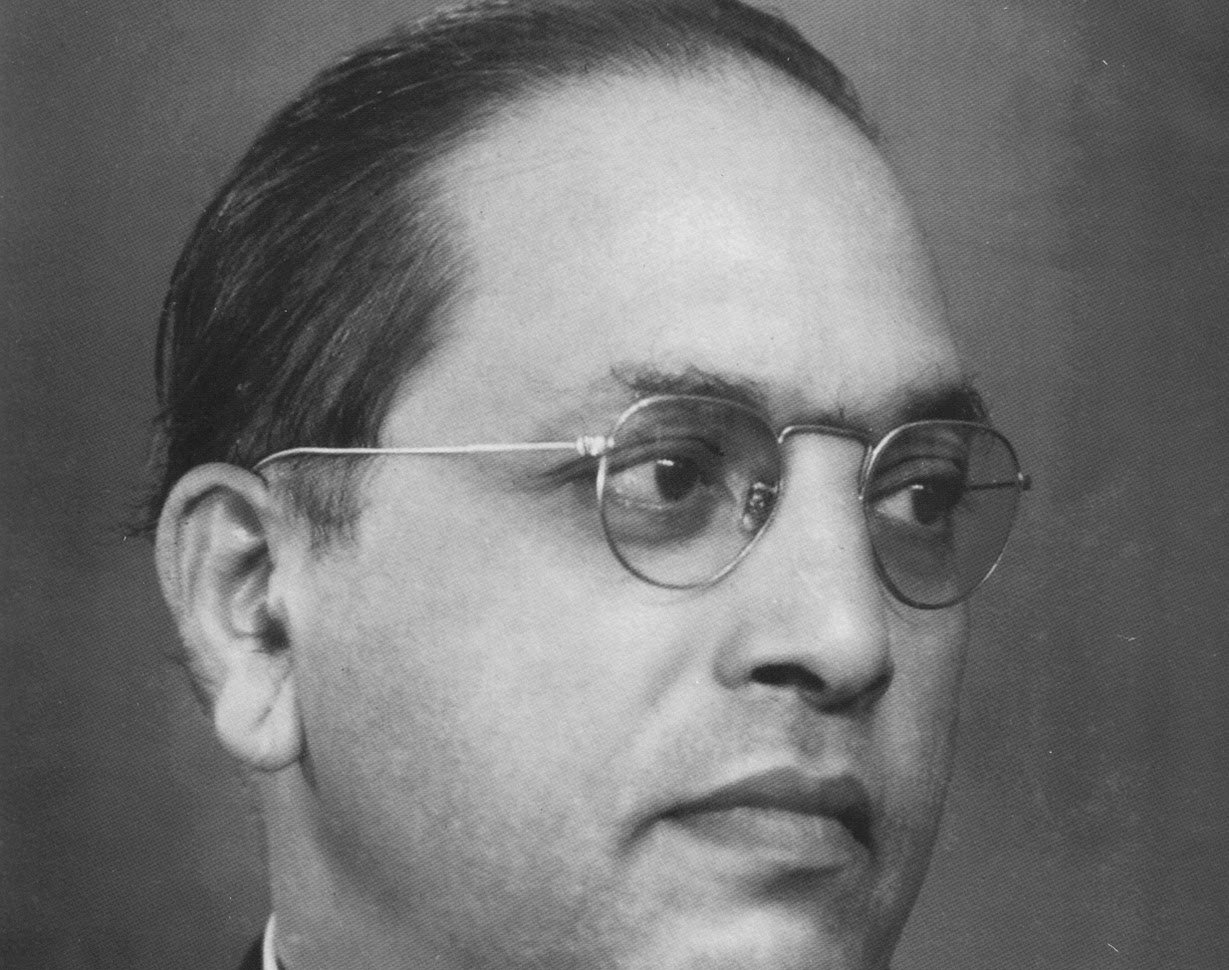
On 20 November 1930, at the fifth sitting of the plenary session of the first Round Table Conference, held in London (vol. 2, introduction, p. ii), B.R. Ambedkar spoke for the Depressed Classes, a colonial-era name for the communities now called Dalits. “We know that political power is passing from the British into the hands of those who wield such tremendous economic, social and religious sway over our existence,” he said, as his speech is printed in volume 2 of his Writings and Speeches (p. 506). He did not oppose self-rule. “Although we want responsible Government,” he told the conference (p. 507), “we do not want a Government that will only mean a change of masters.”
His demand was structural (p. 507). “The best guarantee for the settlement of our problem,” he said, “is the adjustment of the political machine itself so as to give us a hold on it, and not the will of those who are contriving to be left in unfettered control of that machine.”
Fifteen years later, in What Congress and Gandhi Have Done to the Untouchables (1945), he turned the warning into an argument about class. The Congress here is the Indian National Congress, which led the independence movement; Swaraj means self-rule. The “Untouchables”, as he called them, did not wish to be placed under “Hindu Raj in which the governing class would be the Bania and the Brahamin with low class Hindus as their policemen” (Writings and Speeches, vol. 9, p. 166). He asked foreign sympathisers of the Congress to put one question to it: “For whose freedom is the Congress fighting? Is it fighting for the freedom of the governing class in India or is it fighting for the freedom of the people of India?” (p. 204).
The governing class, he argued, had changed shape as money gained weight in politics: it was now “a Brahmin-Bania instead of Brahmin-Kshatriya combine as it used to be” (p. 208). Independence would not dissolve it. “The governing class will not disappear by the magic wand of Swaraj,” he wrote. “Swaraj will not be government by the people but it will be a government run by the governing class” (p. 212).
Two things are worth holding on to. First, in this passage “Brahmanism” names a philosophy and a social order: “Speaking for the servile classes,” he wrote, what they expected “in a sovereign and free India is a complete destruction of Brahmanism as a philosophy of life and as a social order” (p. 212). Second, his complaint was not mainly about welfare. “Not bread but honour, is what they want,” he wrote (pp. 212–213).
“Although we want responsible Government, we do not want a Government that will only mean a change of masters.”
— B.R. Ambedkar, first Round Table Conference, London, 20 November 1930 (Writings and Speeches, vol. 2, p. 507)
Two lines sometimes credited to him on this theme, that independence would swap “Foreign Masters” for “Home-bred Masters” and would mean “the replacement of British bureaucracy by a Brahmin bureaucracy”, do not appear in either of the two volumes of his Writings and Speeches quoted here, and are left out.
His own test
Ambedkar did not leave “governing class” as an insult. He proposed a way to check it. “There are two tests one could apply,” he wrote. “First is the sentiment of the people and the second is the control of administration. I am sure there cannot be better and more decisive tests than these two” (p. 205).
The first test, sentiment, is hard to measure from records. The second can be checked, at least where the state counts. It can be applied to four places power sits now: the administration, the courts, the press and private capital. Each count has limits, given with it.
The administration
Here the record shows what reservation was built to do. Scheduled Castes, or SCs, are the communities listed under the Constitution for reservation. According to the Department of Personnel and Training’s Annual Report 2024–25, Scheduled Castes held 14.2% of Group A posts in the central government’s ministries and departments, The Wire reported, citing The Hindu’s reading of the report. Group A is the senior grade of the civil service, and 15% of posts filled by direct recruitment are reserved for Scheduled Castes (same report). The 15% applies to new direct recruits, while the 14.2% counts everyone in Group A, so the two are close but not a like-for-like comparison. The SC share of the population was 16.6% in the 2011 Census (Registrar General of India, Census of India 2011: Data Highlights, 30 April 2013). The same report shows who does the government’s sanitation work: more than 66% of its Group C safai karmacharis (sanitation workers) came from Scheduled Castes, Scheduled Tribes and Other Backward Classes (The Wire).
These are central government figures across 80 reporting units. They do not show the senior-most tier, Secretaries and Additional Secretaries, separately, and they do not cover the states.
The courts
i
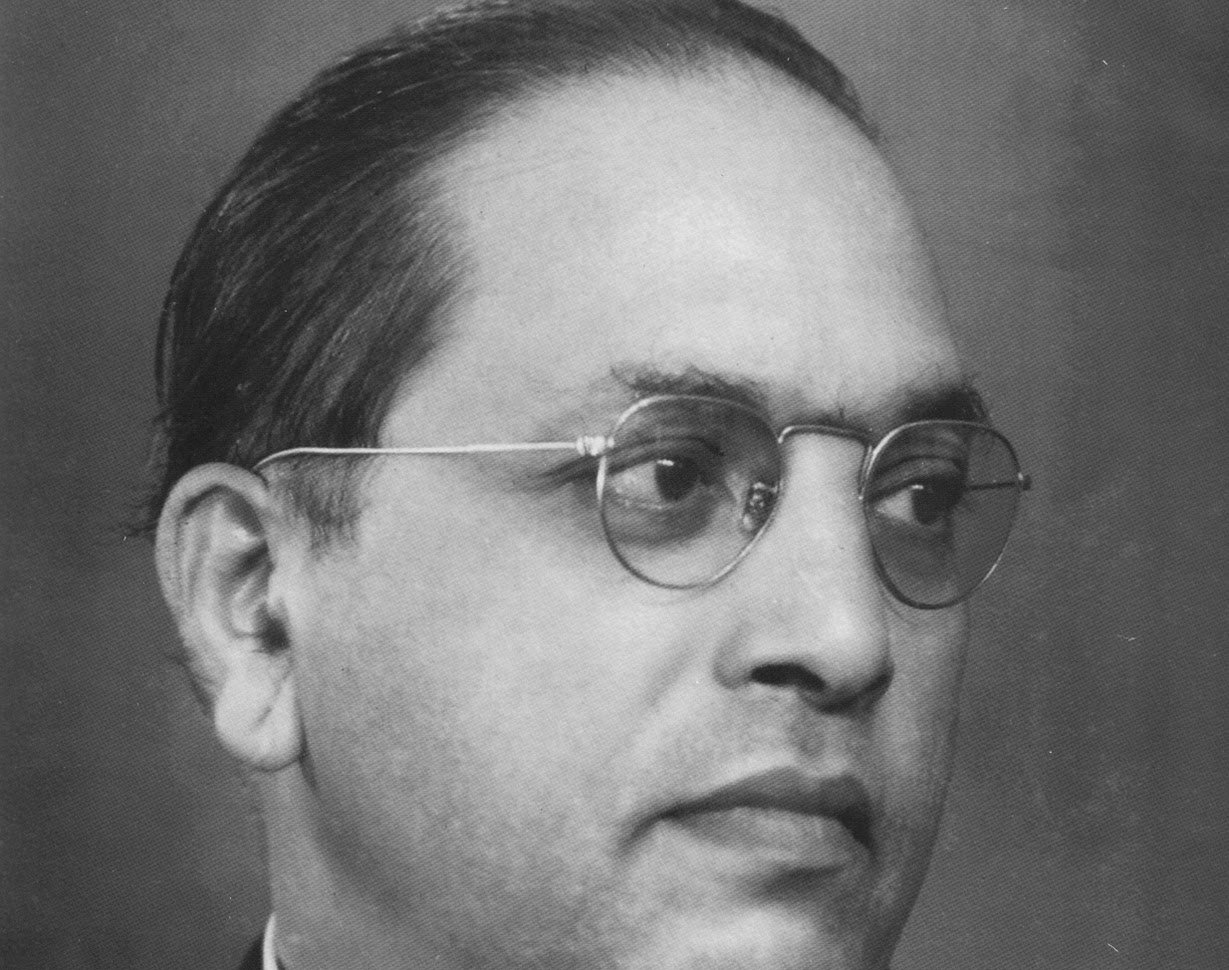
Public domainOriginal on commons.wikimedia.orgThe Constitution’s rule for appointing High Court judges, Article 217, makes no provision for reservation. Since 2018, people recommended for High Court judgeships fill in a form declaring their social background. Of the 849 High Court judges appointed from 2018 to 9 March 2026, 33 belong to Scheduled Castes by that declaration, 3.9%, the government told the Lok Sabha, the lower house of Parliament, in reply to unstarred question 3545 on 13 March 2026. The count covers new appointments only, not every judge now sitting.
The press
In 2022, Oxfam India and Newslaundry surveyed leadership posts (editor-in-chief, managing editor, executive editor, bureau chief, resident editor, director, producer) across print, TV and digital outlets. Of 218 posts, 191 were held by people from the general category (those not in a reserved category), and “none of the mainstream media houses had people belonging to SC/ST categories in leadership roles” (Who Tells Our Stories Matters, 2022). Two SC or ST people held leadership posts, both in alternative media.
Capital
India’s Sixth Economic Census, the official count of business establishments, found that 11.4% of establishments in private proprietorship were owned by Scheduled Castes, 5.4% by Scheduled Tribes, 40.8% by Other Backward Classes and 42.4% by others (Economic Census, ch. 2, s. 2.6). It counts establishments run by single owners, not their size, so it says little about who controls large firms.
The other side: what changed
The other side of the ledger is real, and Ambedkar helped build it. The political machine he asked to have “adjusted” was adjusted: the Constitution, which he steered as chairman of its Drafting Committee, reserves seats for Scheduled Castes in the Lok Sabha and the state assemblies, and allows reservation in public posts for “any backward class of citizens” the state finds “not adequately represented in the services”. India has had two Dalit Presidents, K.R. Narayanan (1997–2002) and Ram Nath Kovind (2017–2022) (The Economic Times, 20 June 2017; Kovind’s term). In 1945 he had written that some leaders of the Congress held “that the servile classes are a contemptible people, who must remain servile and who must never aspire to rule” (p. 209). Eight decades later, Scheduled Castes hold close to the reserved share of the central government’s senior grade, and Dalits have held the country’s highest office.
The records also show that the change is uneven. Where the Constitution reserved seats or made room for reservation, Dalit representation is close to the Dalit share: seats in the Lok Sabha and state assemblies are reserved in “as nearly as may be, the same proportion” as the population, and the central government’s senior grade is near its reserved 15%. Where it did not, in the High Courts, newsrooms and private business, the counts available sit well below it.
What Dalit voices say
K.R. Narayanan, the first Dalit President (The Economic Times), addressed the question directly on the eve of the Republic’s golden jubilee in 2000. “Untouchability has been abolished by law but shades of it remain in the ingrained attitudes nurtured by the caste system,” he said. Reservation in educational institutions and public services, he went on, came from the Constitution, but “these provisions remain unfulfilled through bureaucratic and administrative deformation or by narrow interpretations of these special provisions”. He warned: “There are signs that our privileged classes are getting tired of the affirmative action provided by Constitutional provisions” (speech of 25 January 2000).
“Had there not been reservation in education, I would have remained somewhere else.”
— Chandra Bhan Prasad, Dalit journalist and writer, Ideas of India, Mercatus Center
The implications
Ambedkar’s 1945 test asked who controls the administration. Today’s records say it depends on where you look: close to proportional where the Constitution made room for reservation, and far from it where it did not. His own closing worry was not about numbers but about purpose: whether “the governing classes in India having captured the machinery of the State” would “undertake a programme for the reform of the social order as distinguished from a programme of social amelioration” (p. 213). That question is still open.
What to watch: the next counts of who holds the central government’s Group A posts and who is appointed to the High Courts, set against the figures above.