Listen to this article
Read by an AI-generated voice · Report a mispronunciation
India’s law against caste violence, the Scheduled Castes and Scheduled Tribes (Prevention of Atrocities) Act, 1989 (the SC/ST Act), punishes insulting or abusing a member of a Scheduled Caste, which includes Dalits (the people once branded “untouchable”), or of a Scheduled Tribe. For two of its offences, Section 3(1)(r) and (s), the insult must happen “in any place within public view”, a phrase LawChakra, a legal news site, describes as drafted with physical spaces in mind. A ruling from Kolkata now says that phrase can cover Facebook.
What happened
According to Verdictum, a legal news site, the complainant belongs to a Scheduled Caste and alleged that two people from the “general caste” (a term for castes outside the reserved categories) posted foul and casteist abuse on Facebook aimed at his caste identity, religion, God and family. The complaint became Behala Police Station Case No. 274 of 2022 in Kolkata, the capital of the eastern state of West Bengal. LawChakra reports that he attached screenshots, that police recorded his statement under Section 164 of the Code of Criminal Procedure (CrPC), the provision for statements made before a magistrate, and that they seized the links and screenshots under a seizure list.
On 20 January 2023 police filed a final report marked “Nil/No clue”, the closure report police file when they say they cannot take a case further. LiveLaw reports their stated reason: a request routed through the Cyber Police Station, Kolkata had not produced user details from Facebook. The complainant filed a protest petition. The Special Court in Alipore, in Kolkata, the court that hears SC/ST Act cases there, rejected it, partly because charge sheets had been filed in three other cases the same complainant brought.
What the High Court held
Justice Uday Kumar called that reasoning “perverse and contrary to the basic tenets of criminal adjudication”: a person who has used the law before cannot be presumed to have a weak complaint now.
On the investigation, the judgment says that when screenshots and links have been formally seized and are backed by the complainant’s statement, police “cannot throw up its hands reporting ‘no clue’” because a local cyber inquiry hit a dead end with Facebook or its parent company Meta. It said they must first exhaust the state Criminal Investigation Department’s (CID) cyber-forensic and IP-log tracing; IP logs are records of the internet addresses behind online activity.
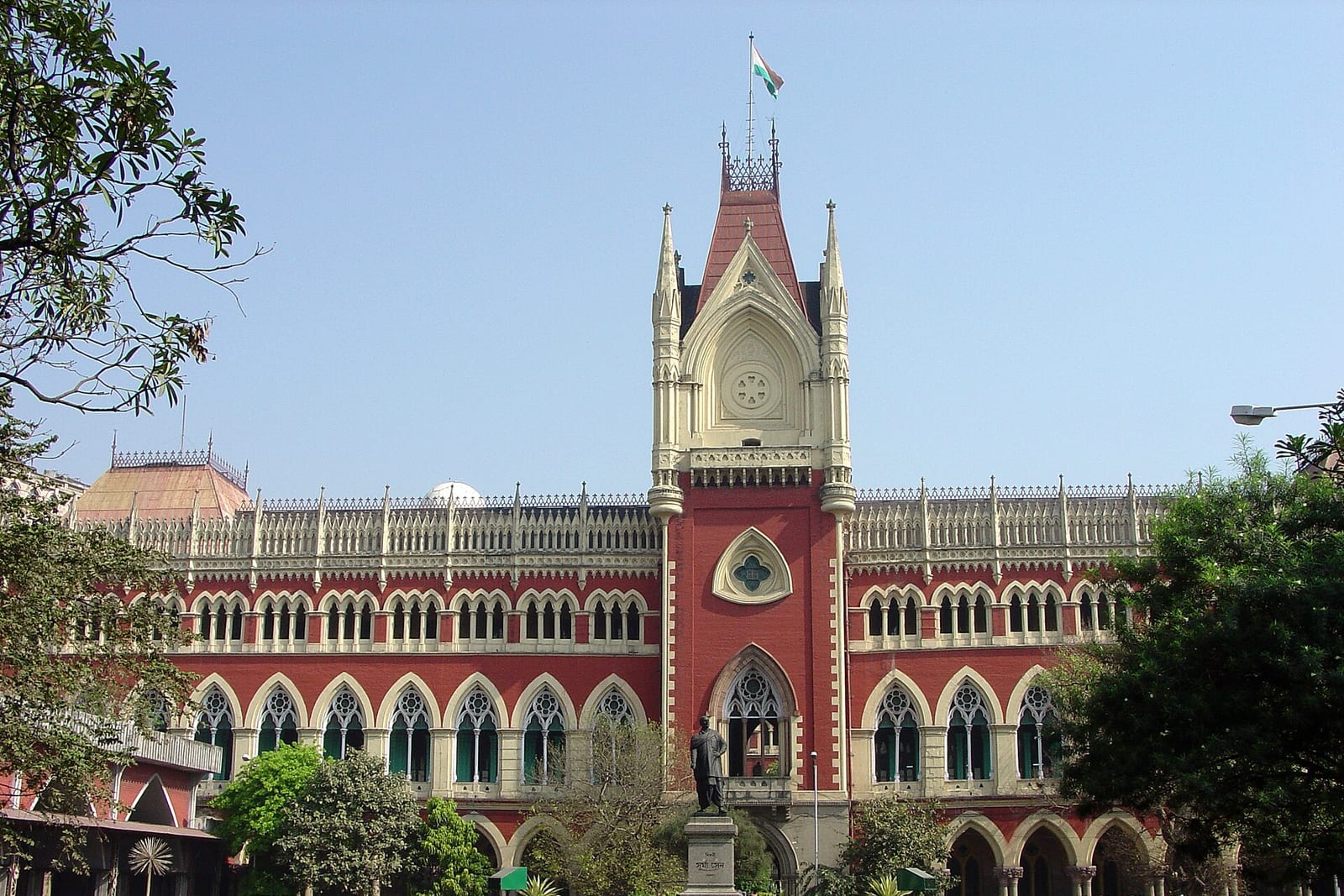
The court quashed the Special Court’s acceptance of the police report and its dropping of the case, and sent the matter back to the Special Court. Further investigation is to run under the direct supervision of the Deputy Commissioner of Police of Kolkata Police’s “South-West Division / Specialised Cyber Cell supervisory tier”. That officer must deploy cyber-forensic personnel to trace the digital footprints and profile logs of the posts, and report within three months of the judgment being communicated.
Why does “public view” matter online?
The offence needs a public setting, and abuse typed on Facebook has none in the physical sense. The ruling says the setting can be digital, and that a dead end with a platform over user details does not end the inquiry.
Is this the final word on “public view”?
No. This is one High Court judge’s observation in a case sent back for investigation. The Supreme Court has read the phrase strictly for abuse inside a private home. The Mooknayak reports that in May 2026, in Gunjan @ Girija Kumari v. State (NCT of Delhi), a two-judge bench of India’s Supreme Court quashed an SC/ST Act case over slurs allegedly used inside a private home, holding that a place is “within public view” only when members of the public can witness or hear the abuse. The bench relied on earlier Supreme Court decisions, including Hitesh Verma v. State of Uttarakhand (2020). The Communist Party of India (Marxist), CPI(M), called the ruling “narrow” and “legalistic”. The reports on the Calcutta ruling (LawChakra, LiveLaw and Verdictum) do not mention a Supreme Court decision on posts made online.
Thenmozhi Soundararajan spoke in 2022 about the harassment that followed a cancelled Google talk, not about this case. The Google characterisation is hers.
“In the aftermath of Google’s discriminatory actions, we have had bigots try to run doxxing campaigns, they’ve run disinformation campaigns. But more importantly, they’ve tried to find my parents and inflict harm on them.” — Thenmozhi Soundararajan, Dalit-American activist and Executive Director of Equality Labs, interview with The Quint, 2022
What does the ruling not decide?
It does not say the accused wrote the posts; that is left to the further investigation and, if it comes to it, trial. The accused are presumed innocent, and the allegations remain to be tested. The reports on the ruling describe a direction to the police to trace the posts, not an order to Meta to hand over data.
Key terms
- “Nil/No clue” final report: the closure report police file when they say they cannot take a case further.
- Protest petition: a complainant’s objection to a closure report.
- Further investigation: police inquiry reopened on a court’s order, here under a senior officer.
- Special Court: the court designated to try SC/ST Act cases.
What to watch
The three-month report to the Special Court in Alipore, the case’s next step. Also whether another High Court bench, or the Supreme Court, tests the “digital public view” reading against its own stricter line.