Listen to this article
Read by an AI-generated voice · Report a mispronunciation
Why it matters now
The 58th anniversary falls on 25 December 2026. Kilvenmani is often described as one of the earliest and most violent crimes against Dalits in independent India, and its legal ending, Kandasamy and others argue, has been repeated since. Every one of the principal accused went free. “The court set a dangerous precedent,” the writer Meena Kandasamy said in a 2015 lecture, Milli Gazette reported: “Kilvenmani continues to happen all over India,” including, she said, Tsundur and Bathani Tola, later massacres of Dalits in Andhra Pradesh and Bihar. The Dalit Project has followed the same pattern in Dangawas, where the state has convicted no one, and in how courts read Khairlanji and Una.
Timeline
- 1961: Thanjavur had the highest proportion of landless labourers in the state, nine labourers for every 10 cultivators, Mythily Sivaraman noted, The Hindu reported.
- 1960s: Communist leaders organise the region’s farm workers to demand higher wages. Landlords organise in the Paddy Producers’ Association, founded by Gopalakrishna Naidu, according to The Hindu.
- 25 December 1968: Two peasant leaders are beaten and locked in a house; workers free them, and a landlords’ agent, Pakkirisamy, is killed. That night armed men attack the Dalit hamlet, lock the people sheltering in a hut inside it and set it on fire; 44 die (The Hindu).
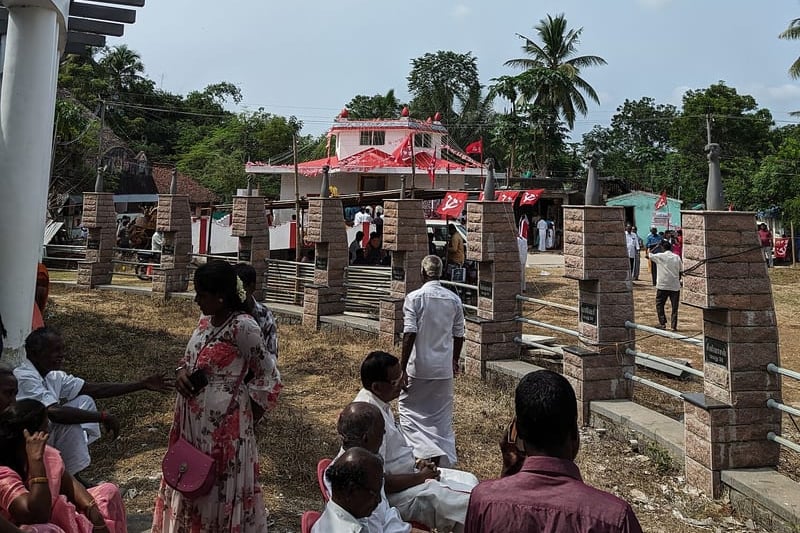
- 1970: A memorial to the victims is set up at Keezhvenmani (The Hindu).
- Trial and appeal: A Sessions Court sentences the accused to 10 years in prison. On appeal, the Madras High Court acquits them (The Hindu).
- 1980: Gopalakrishna Naidu is killed, by members of Left parties, according to The Hindu; the Indic Journal dates it to 1980.
Origins: labour bound by caste
The paddy fields of the Thanjavur delta were owned by a few landlord families and worked by landless labourers, among them the Dalits of Kilvenmani. Under the pannaiyal system, an attached labourer “pledged the services of himself, his wife and their children to be born to the landlord” until a loan was repaid, IIT Indore’s Mapping Massacres project records. Dalits lived apart, in the cheri, a segregated hamlet on the edge of the village; Kilvenmani was one.
According to 1971 Census figures reported by The Hindu, landless labourers made up 41% of Thanjavur’s rural population, against a state average of 29%, and the district had “the highest percentage of Harijans among the landless”. (Harijan was the period’s term for Dalits.) Landlords punished workers who resisted with whipping and with forcing them to drink cow dung mixed in water, The Hindu reported. “Tea stalls used to keep aluminum cups for the Dalits,” the survivor G. Palanivel told the paper.
Shalin Maria Lawrence, a Dalit writer, argues that this was never class exploitation alone. Landowning castes, she wrote in South First, “were never used to paying Dalits for their labour. They thought that they were entitled to get free labour from them on the basis of caste.”
How it unfolded
The wage demand
Communist leaders, among them B. Srinivasa Rao, Manali Kandasami and G. Veeraiyan, organised the workers to demand higher wages, The Hindu reported. “All that the workers demanded was just half-padi (measure) paddy more than what they were receiving as wages,” the CPI(M) leader G. Ramakrishnan told the paper. “But the landlords insisted that the Communist party flag be removed first and they join the Paddy Producers’ Association.” (A padi is a local measure of grain.) The workers refused. When local labourers refused the landlords’ rates, Gopalakrishna Naidu, who led the association, would send workers from outside for the harvest, The Hindu reported. “A series of confrontations and a few murders over the years” culminated in the massacre, the paper wrote.
The wage was not the only thing at stake. Mythily Sivaraman, the communist and women’s rights activist who documented the massacre, wrote that the landlords were also angered by the workers’ refusal to stay subservient (The New Indian Express, citing her 1973 essay “Gentlemen Killers of Kilvenmani”). “The landlords’ frustration, and inability to reconcile themselves to the Harijans’ new-found identity found expression on December 25, 1968, in Keezhvenmani,” she wrote, The Hindu recorded. (Harijan, the period’s term for Dalits, is the word in her text.)
The night of 25 December
That day two peasant leaders, Muthusamy and Munian, were beaten and locked in a house; the workers went as a group to free them, and Pakkirisamy, a landlords’ agent, was killed, The Hindu reported. The retaliation began that night. Families fleeing the attack took refuge in the hut of a labourer, Ramaiah. The attackers, whom the survivor G. Palanivel describes as the landlord’s henchmen, locked them in and set it on fire. 44 people died in it, most of them women and children, according to The Hindu and Mapping Massacres.
G. Palanivel, then 22, survived. “I managed to escape. But the henchmen of the landlord, Gopalakrishna Naidu, hacked my thigh with a sickle. I ran away, taking advantage of the pitch darkness, and hid in the paddy fields with some other workers,” he told The Hindu in 2023, at 77. He later spent six months and 19 days in Thanjavur prison before being moved to Tiruvarur, the paper reported. Naidu, the principal accused, was convicted by the Sessions Court and acquitted by the Madras High Court; he was killed in 1980, the Indic Journal records.
“I ran away, taking advantage of the pitch darkness, and hid in the paddy fields with some other workers.”
— G. Palanivel, survivor, to The Hindu, 2023
The state’s response
i
CC0 1.0Original on Wikimedia CommonsC.N. Annadurai, the chief minister, of the Dravida Munnetra Kazhagam (DMK), the Dravidian movement’s governing party, reportedly said “People should forget this as they forget a feverish nightmare or a flash of lightning”, The New Indian Express recalled. Periyar, the founder of the Self-Respect Movement, reportedly said a month later that a wage “is not something you can demand, a wage is that which is fixed by market conditions”, the paper reported.
According to G. Ramakrishnan, the massacre forced the government to appoint the Ganapathia Pillai Commission, which recommended a minimum wages law and house pattas (titles to house plots) for Dalit peasants, and “as many as 180,000 families had benefited”, The Hindu reported.
The acquittal
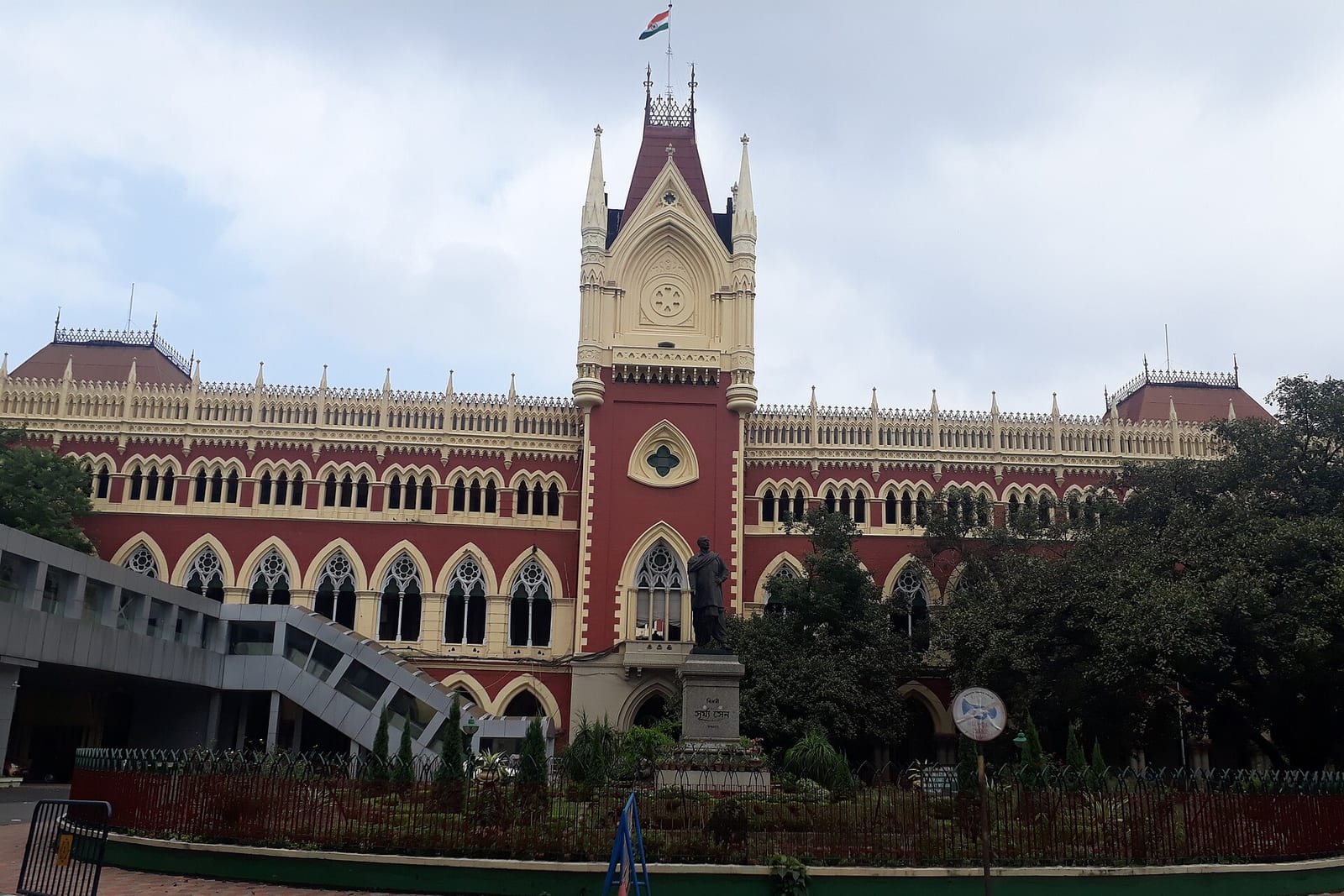
The Sessions Court sentenced Gopalakrishna Naidu and others to 10 years in prison. The Madras High Court acquitted them, The Hindu reported, on the ground that those who set the fire were unaware that 42 people were inside the hut. The Indic Journal describes another part of the court’s reasoning in its own words: the court, it writes, found it difficult to believe that “men of substantial landholding, men who owned cars and rode in them, would themselves walk into a village at night to commit arson and murder”. “Gentlemen of property, the logic ran, do not personally burn huts,” the journal adds. Accounts differ on the sentence and on the year of the High Court’s judgment.
Kandasamy’s criticism starts with the investigation. “The police framed a very flimsy case; they watered down every testimony and they gave plenty of escape routes for the accused to walk free,” she said in the 2015 lecture, Milli Gazette reported. The judgment, she said, “was as merciless as the massacre itself.”
Where it stands today
No one stands convicted for the deaths. A memorial to the victims was set up in the village in 1970 (The Hindu); South First describes it as erected by the CPM, and the communist parties remain strong there. “Today, caste discrimination has come down drastically,” Palanivel told The Hindu in 2023, adding that the cordial relations he described were not possible where the communist parties are not strong.
Others see less change. D. Ravikumar, then general secretary of the Viduthalai Chiruthaigal Katchi (VCK), a Dalit political party, said in 2018 that land reforms had yet to be implemented and that farm labour still paid a fraction of urban wages; the writer Stalin Rajangam said retaining or gaining land was still a struggle (The New Indian Express).
Key players
- The labourers of Keezhvenmani: Dalit families, of the Devendra Kula Vellalar and Paraiyar communities in Shalin Maria Lawrence’s account.
- The communist movement: the CPI(M) and its farm workers’ organisers, who led the wage struggle.
- The Paddy Producers’ Association: the landlords’ body, founded by Gopalakrishna Naidu, who was acquitted.
- The courts: the Sessions Court that convicted, and the Madras High Court that acquitted.
- The chroniclers: Mythily Sivaraman, whom The Hindu describes as the first outsider to enter Keezhvenmani, whose essays were collected as Haunted by Fire; Indira Parthasarathy, whose novel Kuruthipunal is set there; and Bharathi Krishnakumar, whose documentary Ramaiahvin Kudisai (Ramaiah’s Hut) tells its story (The Hindu).
Open debates
Caste or class? Kilvenmani was long told as a class conflict between landlords and labourers. The “caste-identity of the victims of the massacre was overlooked until recently both by the academia and mainstream media”, Mapping Massacres notes. Lawrence learned of it only in 2016, and asks why most Dalits did not know: “Caste power always overpowers political power,” she wrote.
How many died? The Hindu, Mapping Massacres and Lawrence all give 44 dead; the High Court’s ground for acquittal, as The Hindu reports it, refers to 42 people inside the hut. Sources also differ on how many of the dead were women and how many children.
Who gets the credit for change? CPI(M) leaders credit the communist movement with the reforms that followed. Others, like the scholar Karthikeyan Damodaran, point to the rise of Dalit political parties as the larger change since (The New Indian Express).
What to watch
- 25 December 2026: the 58th anniversary of the massacre.
- Land: whether Tamil Nadu acts on the land reforms that Dalit parties say are still not implemented in the state. No bill or deadline is scheduled.
- The courts: how appeals in later massacres of Dalits, among them Dangawas, are decided, measured against the Kilvenmani judgment Kandasamy calls a “dangerous precedent”.