Listen to this article
Read by an AI-generated voice · Report a mispronunciation
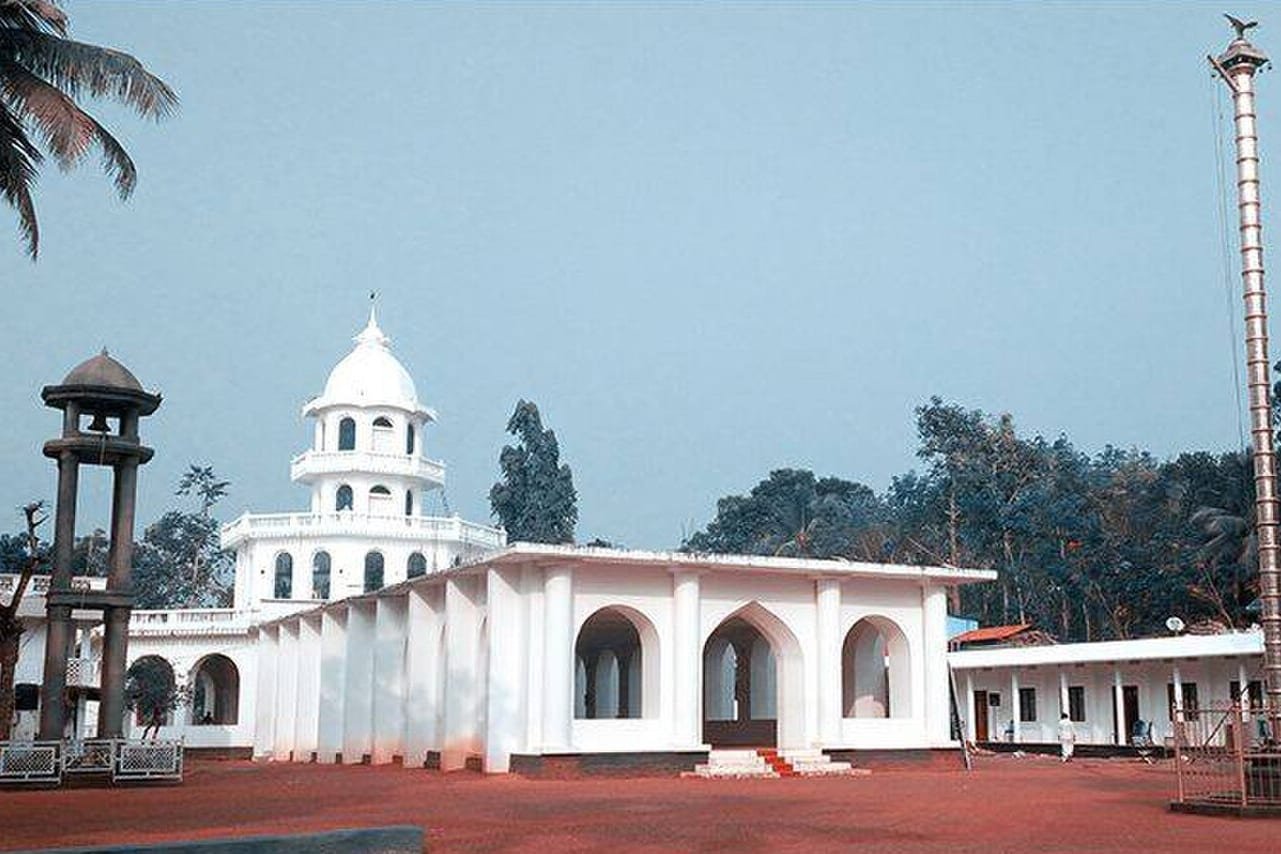
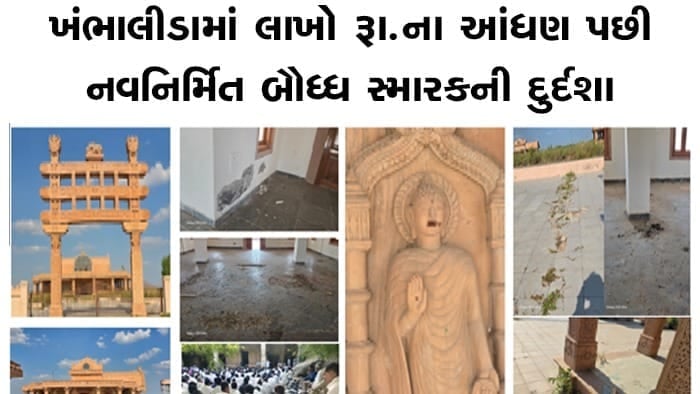
On 20 October 2026, Ashoka Vijayadashami, a day of Buddhist observance, about a thousand followers of the Buddha from across Saurashtra, the peninsula that forms western Gujarat, travelled to the Khambhalida caves near the town of Gondal in Rajkot district, in the western Indian state of Gujarat, Gujarat Samachar reported. The caves are believed to date from the 4th or 5th century. Beside them stands a Buddhist monument that the Gujarat state government is building. The visitors found its window glass smashed, its doors bent, its floor tiles torn up and a carving of the Buddha on one of its doorways defaced; the paper did not say by whom. There was no watchman, and the paper reported complaints that the last guards had left three months earlier because they had not been paid.
The monument has not been inaugurated. That matters beyond one unopened building. It is a test of whether Gujarat treats Buddhism as a living faith with present-day followers, or only as a heritage it can show to tourists.
A site that is still in use
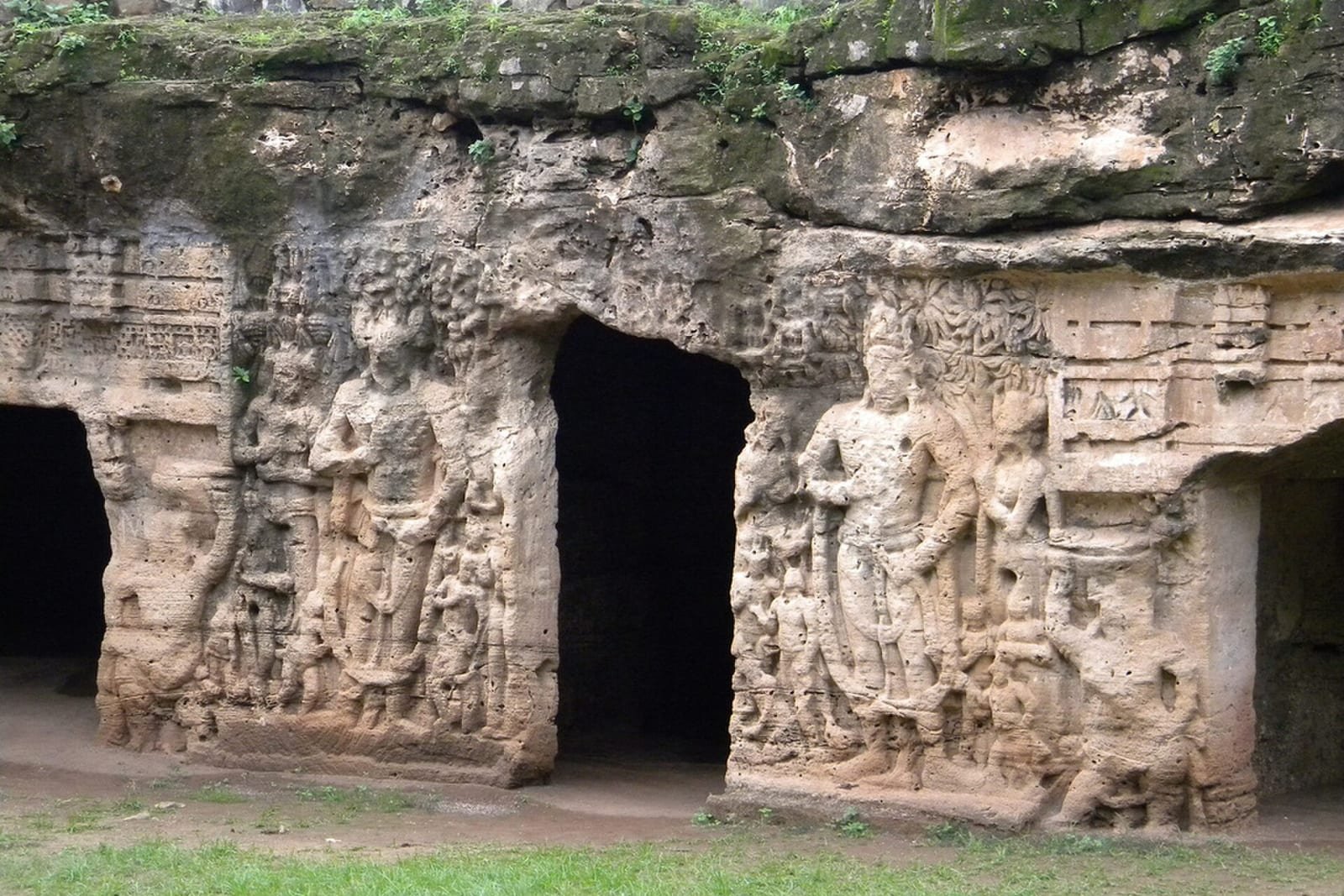
Khambhalida is a cluster of about 15 rock-cut caves with a chaitya-griha, or shrine hall, at the centre. Carvings of the Bodhisattvas, or enlightened beings, Avalokiteshvara and Vajrapani flank its entrance, and the archaeologist P.P. Pandya found the caves in 1958, according to the state’s own Gujarat Tourism page. Wikidata lists them as a state protected monument, S-GJ-296: a site protected by Gujarat itself, not one of the monuments of national importance that the central government’s Archaeological Survey of India looks after.
October is also when Ambedkarite Buddhists mark the day in 1956 on which B.R. Ambedkar, the Dalit leader and architect of India’s Constitution, renounced Hinduism and embraced Buddhism in the central Indian city of Nagpur with hundreds of thousands of followers. Dalits are among the communities once branded “untouchable” under the caste order, and for Ambedkarite Buddhists the conversion marks a leaving of that order. Every year, The Wire reported, “the state sees mass conversions by Dalits to Buddhism” on festivals such as Dussehra, a major autumn festival. A gathering at Khambhalida in this season brings a living community to an ancient site. The visitors asked how the state could show such indifference to what they called Saurashtra’s only Buddhist heritage, Gujarat Samachar reported.
Fifteen years of deadlines
The timeline comes from the local press.
- 2011. The state took up a project to develop the site for visitors. Vajubhai Vala, then Gujarat’s finance minister, laid the foundation stone, Abtak Media reported in 2021.
- The stall. After some work, the project stopped for four to five years, the same report said.
- July 2021. At a meeting in Gandhinagar, the state capital, Arun Mahesh Babu, Rajkot’s Collector and the district’s top civil servant, presented the work done. The then Chief Minister, the head of the state government, was present. The first phase was complete, and the meeting decided that the second phase would be finished within a year. The project’s buildings, about 300 metres from the caves, were a prayer hall, a guest house and a dining hall. The report put development work at the caves at Rs 65 million (Rs 6.5 crore, about US$880,000), and said the government had recently allotted Rs 50 million (Rs 5 crore, about US$680,000) more, according to Abtak Media.
- February 2023. The second phase, now listed with a gallery as well, was nearing completion and would be done in two to three months, Abtak Media reported.
- October 2026. The state-built Buddhist monument near the caves was described as still under construction, its work incomplete, and decaying before its inauguration, Gujarat Samachar reported.
None of these reports explains why the project has taken so long, and none says which of the project’s buildings the damaged monument is. Gujarat Samachar’s report carried no response from the district administration, the state archaeology department or the tourism department.
Heritage for visitors, an unopened monument for worshippers
Gujarat does spend on its Buddhist past. In February 2025 the state’s tourism minister, Mulu Bera, said tourist facilities had been developed at 12 Buddhist sites with help from a central government scheme, Travel Trade Journal reported, and the same report named Khambhalida among the circuit’s key sites. Bera said the state had sent the central government a revised Rs 6.53 billion (Rs 653 crore, about US$75 million) proposal for Dev Ni Mori, a site in Gujarat’s Aravalli district where Buddha relics were found, and that the monastery excavated at the town of Vadnagar was getting a grand dome with 24-hour security. He was speaking at an international Buddhist heritage conference whose participants came from India and 13 other countries.
Set beside that, Khambhalida’s monument had no watchman when the visitors came in October, and its last guards had reportedly left three months earlier, unpaid, according to Gujarat Samachar. A circuit built for visitors from abroad is measured by what tourists see. A Buddhist monument beside a living site is measured by whether the people who come to pray can use it. On that second measure, fifteen years after the wider project began in 2011, the monument has not opened.
The state has also had to decide, recently, what Buddhism is. In 2024 Gujarat’s home department, which runs the state’s police and internal affairs, issued a circular saying Buddhism must be treated as a religion separate from Hinduism, so that converting to it needs prior permission from a district magistrate, a district’s chief administrator, under the Gujarat Freedom of Religion Act, 2003, the state’s law on religious conversion, The Wire reported. The Gujarat Buddhist Academy, a Buddhist organisation in the state, welcomed it. “This circular has made it clear that Buddhism is a separate religion and it has nothing to do with Hinduism,” Ramesh Banker, the academy’s secretary, told the national daily The Indian Express, as The Wire reported. For some applicants, permission has been slow to come. In May 2025, 80 Dalit families in the Gujarat city of Surat converted after waiting two years for approval, Maktoob Media reported. Citing the news site The Mooknayak, it reported that leaders of the Swayam Sainik Dal, a Dalit organisation, estimated that 40,000 to 50,000 similar applications, filed by the Dal and other Bahujan organisations, which speak for Dalit and other oppressed-caste communities, were pending across Gujarat.
A state that insists Buddhism is a faith of its own owes its Buddhists more than paperwork. A finished, guarded and open monument at Khambhalida would be a start.
Manav Bauddh of the Buddhist Federation, a Porbandar group that says it has organised a study tour and made representations to the authorities, wrote to The Dalit Project after the gathering asking for the caves to be protected and the vihara inaugurated.
“This is not merely a local concern; it is a matter of preserving Gujarat’s historical, cultural, and Buddhist legacy.” — Manav Bauddh, Buddhist Federation, Porbandar, in a statement to The Dalit Project, 23 October 2026
The case for patience, and why it falls short
The state could argue that this is an ordinary delay, of the kind big public works often suffer. The 2021 and 2023 reports describe real progress, with a first phase finished and a second under way, and Gujarat Samachar describes the building as still under construction rather than abandoned. On this view the problem is slow contractors and budgets, not neglect of a community.
That reading explains a late opening. It doesn’t explain guards who reportedly left unpaid, a carving of the Buddha that the visitors found defaced, or a building they found decaying before its inauguration. A project that is merely late can still be guarded. Whatever the cause, the Buddhists who gather at Khambhalida carry the cost, and none of the reports gives an opening date.
What to watch
- Whether Rajkot’s Collector or Gujarat’s archaeology and tourism departments give a date for the inauguration before Ashoka Vijayadashami in 2027, and say who is responsible for guarding the building now.
- How much has been sanctioned and spent on the monument itself, as distinct from the wider project. The spending figures for Khambhalida come from one local report.
- Whether the defaced carving is repaired, and whether guards are paid and posted again.
Ashoka Vijayadashami comes round again in 2027. Whether the monument is open by then rests largely with the state government that began the project in 2011.