Listen to this article
Read by an AI-generated voice · Report a mispronunciation
On the OECD’s measure, India’s farmers are, on balance, taxed by their own government. That is the finding of the Organisation for Economic Co-operation and Development (OECD), whose Agricultural Policy Monitoring and Evaluation 2025 measures farm support in 54 countries. Subsidies and cash transfers are worth about 11% of what Indian farms receive. Export bans and market rules that hold crop prices down cost more. The net result is a producer support estimate of minus 14.5% of gross farm receipts for 2022–24, the most negative of any country the report covers, by the OECD’s own data.
Why does it matter which farmers?
The report counts help to “farmers”. It does not ask which farmers, or whether caste decides who is one. In India, that is the first question.
What does the OECD count as help?
Four kinds of help matter here:
- Cheap inputs. Subsidies on fertiliser, electricity and irrigation water. In the OECD’s data they are the largest part of the budget help to farmers.
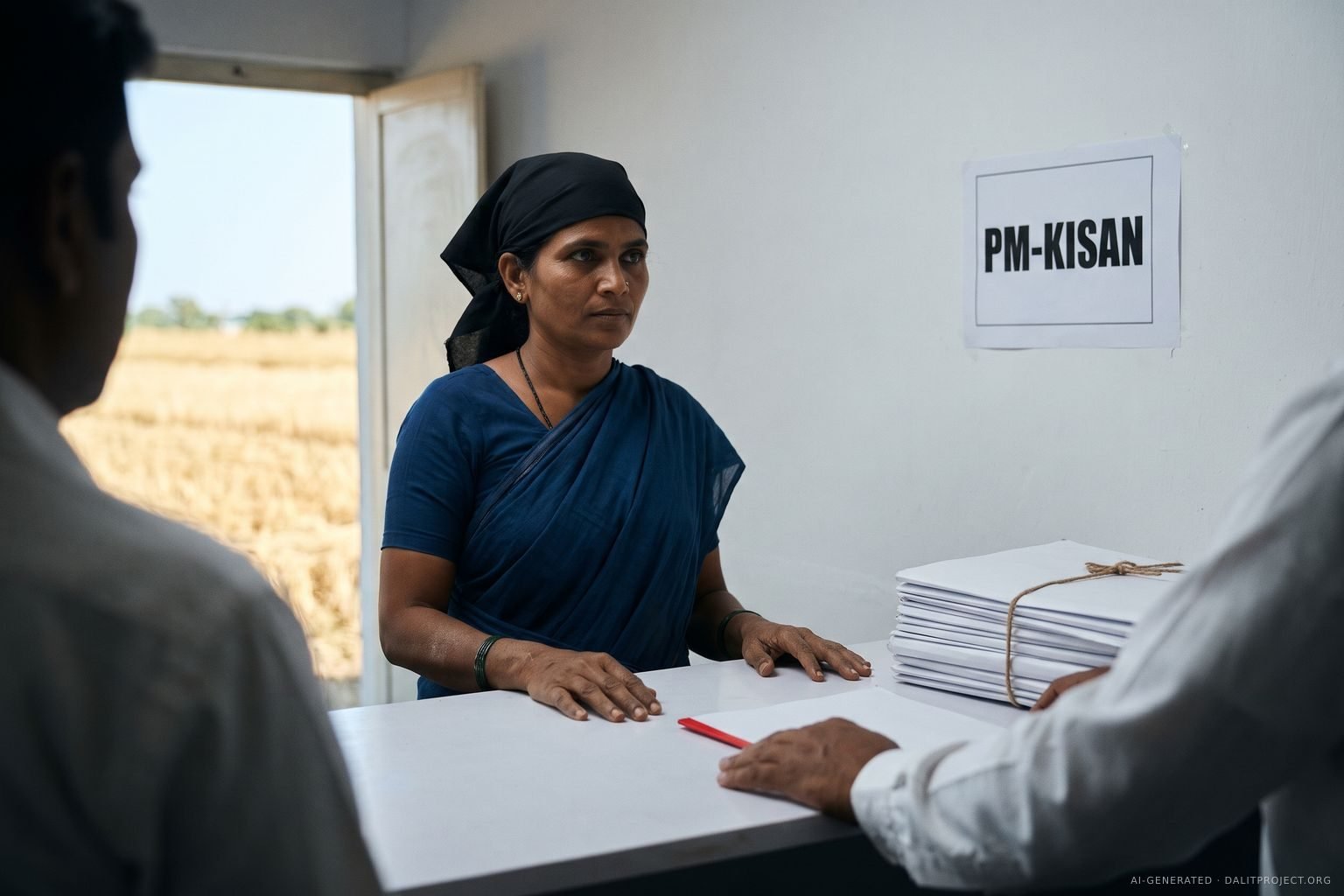
- PM-KISAN. A central government scheme pays 6,000 Indian rupees (about US$69 at 2025 rates) a year, in three instalments, as “income support to all landholding farmers’ families with cultivable land”, the government says. The payment does not depend on what is grown or on farm size.
- The minimum support price (MSP). The central government announces a price each year for 22 crops, at which government agencies buy. It is paid only on what they actually buy.
- Crop insurance. The main scheme insures a crop, so it reaches those who grow one.
Against that, policies that hold Indian crop prices below world prices cost farmers more. The OECD counts this as negative “market price support”, and its data puts it well above the budget help in every year from 2022 to 2024.
Input subsidies are paid through what a farm buys and uses: fertiliser, power for pumps, canal water. So a farm that uses more draws more, and a household with no farm draws none. The OECD counts them as payments based on input use. Its figures do not show who receives them.
Who does PM-KISAN reach?
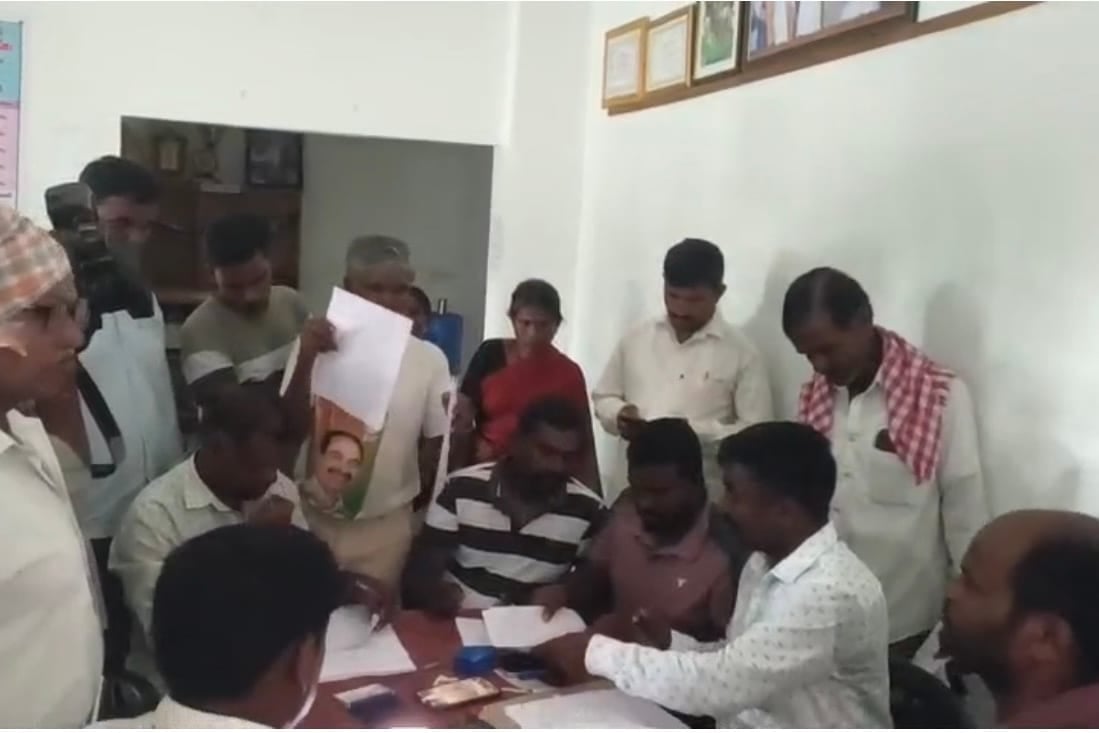
Only families whose land is on the records. The benefit goes to “those farmers whose land details are seeded in PM KISAN portal”, the government says. A tenant, a sharecropper, a family farming land that was never registered, or a farm labourer who owns no land gets nothing from it.
Caste shapes who holds land. In India’s Agriculture Census for 2015–16, Scheduled Castes ran 17.34 million of the country’s 146.45 million operational holdings, or 11.84%. Those holdings covered 13.48 million of 157.82 million hectares, or 8.54% of farmed land. The average Scheduled Caste holding was 0.78 hectares, against 1.08 hectares for all groups, and 78% of them were under one hectare. In the 2011 Census, Scheduled Castes were 18.5% of India’s rural population. (Scheduled Castes is the Indian government’s official category for Dalit communities, among those once branded “untouchable”.)
Those census figures count land that is farmed, not land that is owned, and the two counts come from different years, 2011 and 2015–16. They are still the closest national count. A payment tied to land records can reach Dalit households only as far as their land is on those records, and the census does not count that.
Who gets the minimum support price?
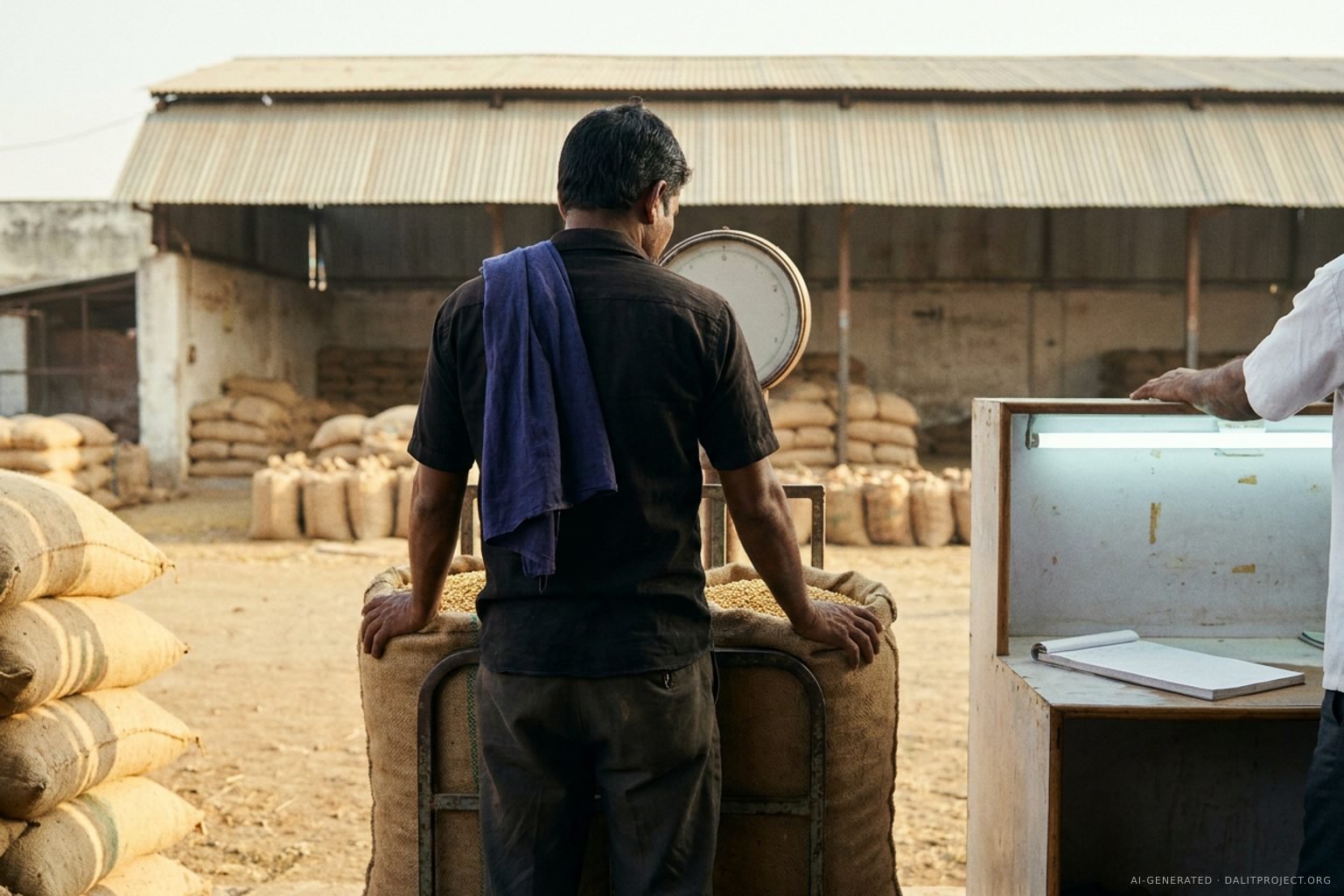
Fewer farmers than the name suggests. The MSP is the price at which government agencies buy. In 2024–25, foodgrain procurement at the MSP reached 1.84 crore (18.4 million) farmers, the government says. PM-KISAN’s November 2025 instalment, by contrast, went to about 9 crore (90 million) farmers. The two counts cover different years and are not the same people, but the gap in scale is wide. A farmer who sells to a private trader is paid the trader’s price; the MSP is not owed on that sale.
What does this look like on the ground?
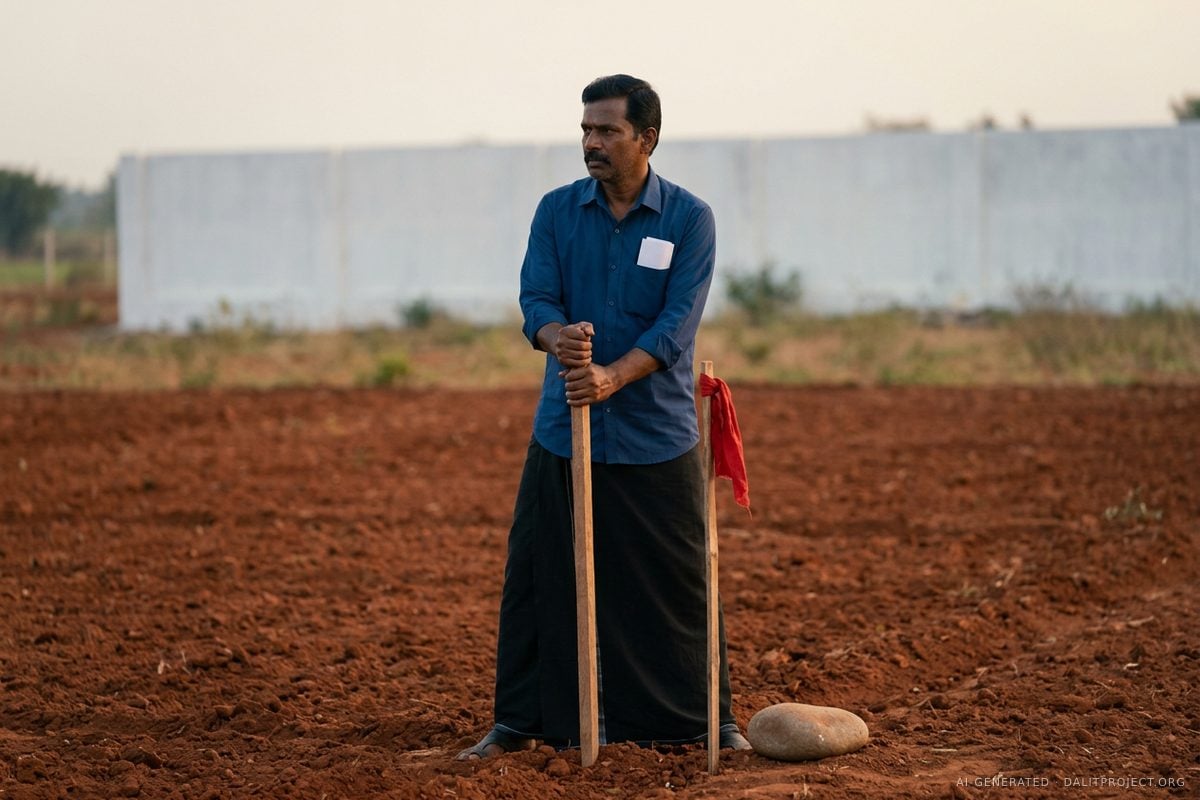
A study published in 2026, from fieldwork in 2019 and 2020 in two Dalit-majority villages in Nanded district, in the western Indian state of Maharashtra, tests some of these kinds of help in one place. The villages are reported in Caste at the shop counter and the trader’s scale. In Bachoti Kamp, 47 of 77 households farm grazing land that was never registered, so “they have no access to subsidies on inputs or any scheme (such as for irrigation) for landowners”, the authors write. Not one cultivator in either village got the MSP for any crop. In Bachoti Kamp, no one reported buying government-subsidised fertiliser.
Jignesh Mevani, a Dalit activist and now a member of Gujarat’s legislative assembly, told The Caravan in 2016 that land is where the gap begins:
“The dominance of upper caste in rural areas is primarily due to their dominance of the control of land. Therefore, land reforms are most vital. … they [Dalits] have been distributed 1,000 acres of land but only on paper. The actual, physical possession has not been guaranteed.”
— Jignesh Mevani, Dalit activist (now a Gujarat MLA), to The Caravan, August 2016
Land reform has passed Dalit labourers over before: Kerala’s celebrated reform left them with cents, not acres.
Who gains from cheap food?
Consumers, the OECD says. Its consumer support estimate, its measure of what farm policy saves or costs consumers, put the saving at about a third of what consumers spent on farm goods in 2022–24, in its data. Food grains sold through the Targeted Public Distribution System, the government’s ration shops, lower costs further.
A household that farms no land buys much of what it eats. For a landless Dalit family, the price rules the OECD counts as a tax on farmers can also mean lower prices at the market. The same price rules can cost the farmer who sells and save money for the labourer who buys. Neither appears in the headline figure.
Isn’t a flat payment fairer to small farmers?
Among landowners, yes. PM-KISAN pays the same to a farm of half a hectare as to one of ten. That case is real. But the rule says who counts as a farmer before any payment is made, and it counts those whose land is on the records. The poorest people working the land, on lease, on unregistered plots or for a wage, are outside it.
Key terms
- Producer support estimate (PSE): the OECD’s measure of what policy adds to or takes from farmers, as a share of gross farm receipts. India’s is negative.
- Operational holding: land farmed as one unit, whether owned or leased. It is not the same as land owned.
- Land records: the official record of who holds a plot. PM-KISAN goes by them.
- Gairan land: grazing or common land in Maharashtra. Its occupants are largely Dalit, the Nanded study notes, and many plots were never regularised.
What’s next
The holdings figures here date from 2015–16. India’s 11th Agriculture Census, for 2021–22, has finished its fieldwork in all three phases, the agriculture ministry told the Lok Sabha on 21 July 2026. Asked for a date to publish its findings, the ministry gave none. When they come out, they should show whether the share of farmed land run by Scheduled Caste households has moved since 2015–16.