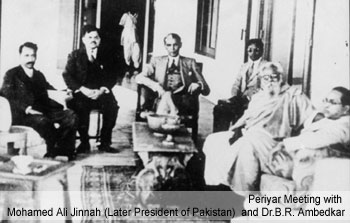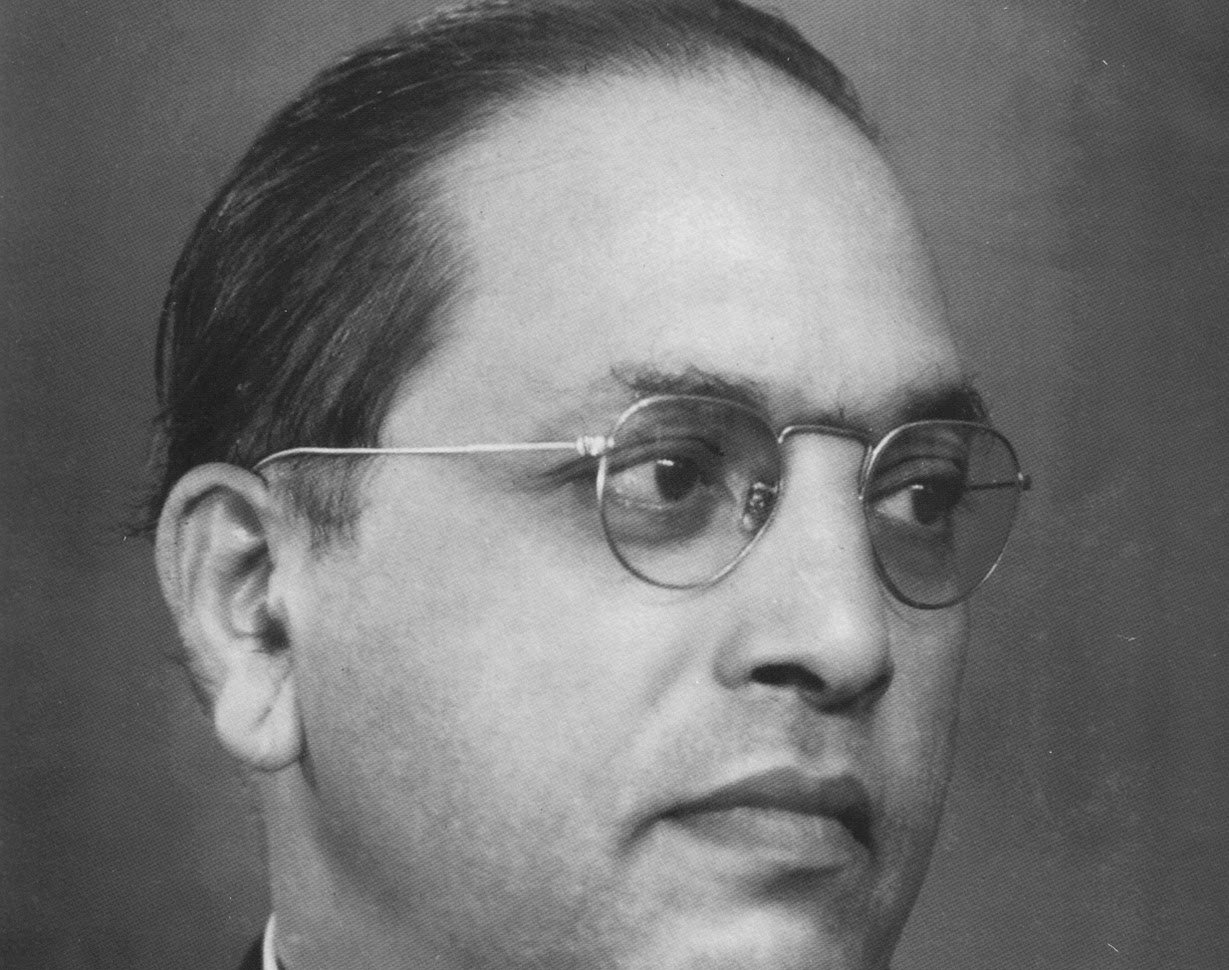
In July 1946, B.R. Ambedkar wrote to W.E.B. Du Bois, introducing himself as a member of “the Untouchables of India” and “a student of the Negro problem,” and asking to see the petition the NAACP was preparing for the United Nations, because, he wrote, his own Depressed Classes were “thinking of following suit.” Du Bois wrote back within the month: he had “every sympathy with the Untouchables of India,” and enclosed the National Negro Congress’s own UN statement. Both letters survive in the University of Massachusetts Amherst’s W.E.B. Du Bois Papers. Ambedkar didn’t need a comparative sociologist to tell him caste and race were describing a related structure. He had already identified the parallel and reached across it, decades before it became the framing device for a bestseller.
An academic tradition, not a metaphor
American sociology reached a similar conclusion independently, around the same years, and used the same word for it. John Dollard’s 1937 Caste and Class in a Southern Town and Gunnar Myrdal’s 1944 An American Dilemma both used “caste” as the operative term for the Jim Crow South’s racial order, an academic tradition serious enough to draw serious academic disagreement at the time; sociologist Oliver C. Cox argued it obscured race’s economic function more than it explained it. Isabel Wilkerson’s 2020 Caste: The Origins of Our Discontents popularized a version of the same comparison for a much wider audience, drawing on India, the American South, and Nazi Germany together. It is journalism, not a peer-reviewed study, and it drew real scholarly pushback for treating three historically distinct systems as one. The underlying comparative instinct is neither new nor purely rhetorical. It has a genuine, contested academic history, and Ambedkar is part of that history’s beginning, not a retrospective proof text for it.
Where the comparison actually earns its keep
Claiming the two systems are the same isn’t where this comparison is useful. It’s useful for checking whether a similarly targeted protection law produces a similar conviction gap elsewhere, and the answer complicates the parallel more than it confirms it.
Of Scheduled Caste atrocity cases actually decided by Indian courts under the SC/ST Prevention of Atrocities Act, roughly a third end in conviction, and the deeper problem is that only a small share of the total backlog gets decided in a given year at all (see “The Conviction Gap” for the full data). The US Bureau of Justice Statistics tracked federal hate-crime prosecutions from 2005 to 2019: across that entire fifteen-year span, against 6,600 to 7,300 FBI-recorded hate-crime incidents every single year, only 1,864 suspects were referred to federal prosecutors in total, and 1,548 of those referrals were declined, over half of the declinations citing insufficient evidence. But of the small number of cases that did reach a federal courtroom, the conviction rate rose from 83% in 2005–09 to 94% in 2015–19, per BJS’s own Federal Hate Crime Prosecutions, 2005–19 report.
That’s close to the inverse of what NCRB’s own data shows for the PoA Act. In India, cases reach a court in enormous numbers relative to the US federal system’s equivalent, and it’s what happens once they’re there that fails. In the US federal system, the bottleneck sits almost entirely at the decision to prosecute at all, before a courtroom is involved. Two countries, two protected-class violence laws, two structurally different places where the same kind of case quietly stops moving.
What this means for the comparison itself
A shared word, “caste,” used across two continents and eighty years, points at something real: both systems assign status at birth and use violence to enforce it. But the specific place each system’s accountability structure actually breaks doesn’t transfer, and that’s the more useful finding for anyone trying to fix either one. A reform aimed at India’s special courts would do nothing for the US federal system’s charging decisions, and a reform aimed at US federal prosecutorial discretion would do nothing for India’s court backlog. Ambedkar reached across the comparison in 1946 because he recognized the shape of an oppression, not because he expected the two systems’ machinery to fail in the same place. Seventy-plus years of data since then bears out the first half of that recognition and complicates the second.