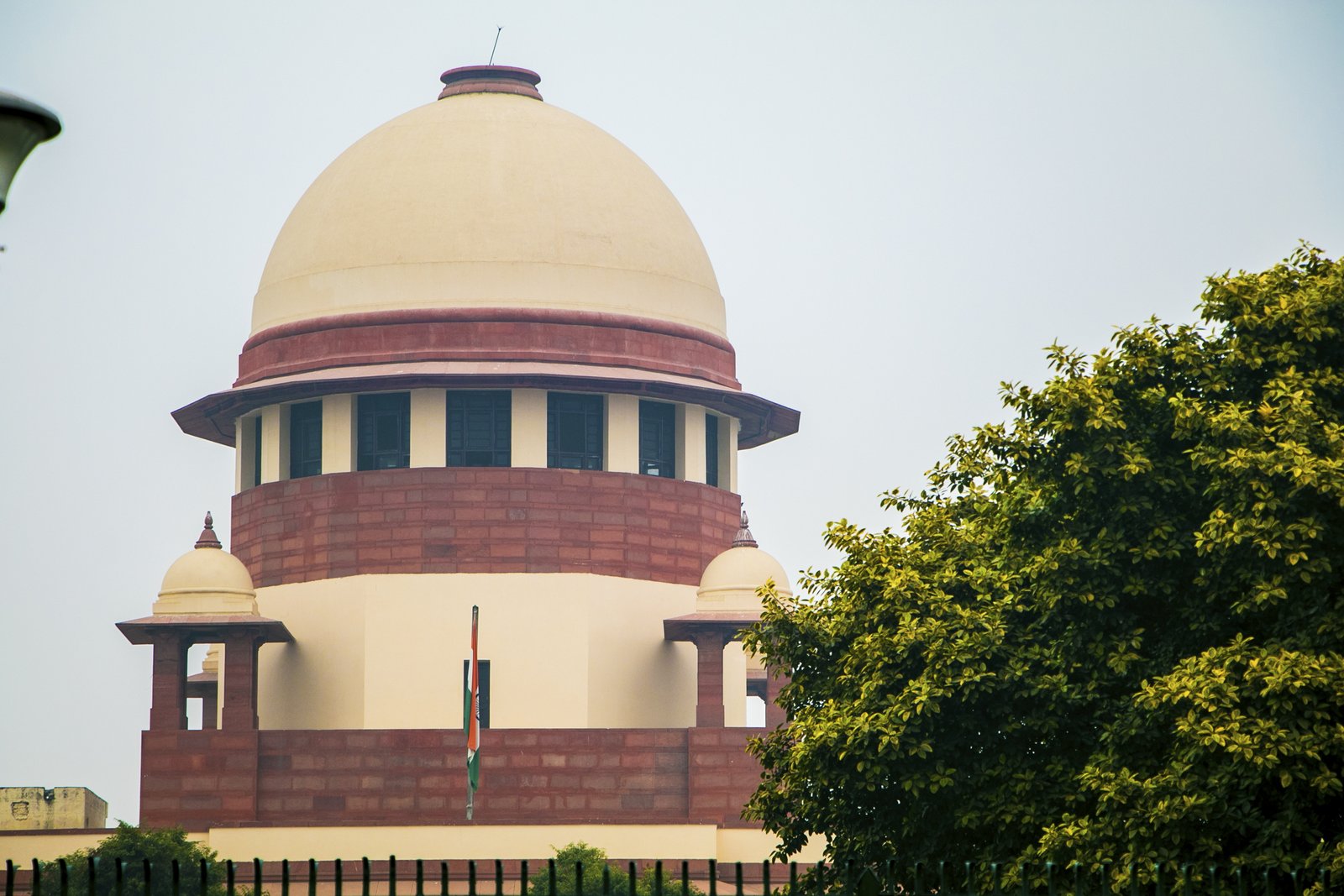
India's universities have had a national equity framework since 2012. What the UGC wrote this year was meant to replace it with something sharper — until the Supreme Court stayed it before it governed a single case.
India has just pre-tested a new way of counting caste ahead of its 2027 census: an open column, where a respondent writes in their own caste name rather than choosing from a fixed list. The last time the state tried to count every caste in the country, in 1931, the fixed list it produced did not stay a research tool. It hardened into the schedules the state still governs by today.
A government that pledged Dalits a first-of-its-kind apology within 15 days of taking office let that pledge quietly lapse instead. By July, a woman had spent 96 days sitting on a Kathmandu pavement asking for something smaller and never delivered either.
A paper presented at this year's ACM Conference on Fairness, Accountability, and Transparency argues that the standard method for auditing text-to-image models for caste bias, checking one demographic category at a time, measures the wrong thing.
A Dalit Catholic man's three-day wait for a grave shows what happens when courts can declare equality but cannot deliver it. A problem hardly confined to India.
The Supreme Court has just closed the door again on Christian converts claiming Scheduled Caste status. The clause it is enforcing is 76 years old, and the man most associated with the constitutional case for Dalit dignity would, on the letter of that clause, have lost his own claim to it the day he converted.
Caste discrimination has never had its own line in international human rights law; it has always been argued in under someone else's, usually race or descent. A side event at the UN Human Rights Council just tested whether that is about to change.
A Sahitya Akademi-winning Tamil writer who spent his career naming caste and land in the state's dry southern districts has died. Most of the world that knows his work at all knows it through a 2019 film. The novel underneath deserves its own reading.
A paper in the Journal of International Development pools sixteen years of national survey data to test a specific question: does marrying across caste lines measurably improve child nutrition outcomes, or has intermarriage been oversold as a fix for an inequality it was never positioned to solve alone?
India's biggest youth movement is led by a Dalit founder who never mentions caste, and carries Ambedkar's biography to his protests. Both facts matter.
A new book asks what is left over when a story about a Dalit woman is neither an atrocity report nor an inspiration reel. That question is the book's argument before a single chapter is read.
A new five-year review shows recorded caste crimes in India rising steadily. The harder question is what a rising number measures, and the answer determines what should be fixed.
India's Supreme Court has said states may divide the Scheduled Castes into sub-groups, to steer reservation toward the most excluded among them. Two years on, four states have moved to implement it while the creamy-layer question the same ruling raised still sits open.
India reserves a share of its university teaching posts for its most excluded citizens, then leaves thousands of those posts unfilled, not for want of applicants, but on the judgment that none was "found suitable."
When Meta pulled a viral video of Dalit farmers resisting a Google data-centre land grab near Visakhapatnam, it didn't cite misinformation or copyright — it invoked a routine intermediary-liability clause, and the law let it.
When the Cockroach Janta Party's own founder named himself Dalit, the movement's own base turned on him with the language of merit — exposing exactly the gap between votes harvested and power shared that Ambedkar warned about.
West Bengal's new government cut OBC reservation from 17% to 7% and struck 77 mostly-Muslim communities from the list, citing a real court ruling against the previous government's procedure. The remedy for a procedural violation became a tool for wholesale erasure.
India is about to produce the most detailed caste data in its history. The government's own maneuvering around a failed delimitation vote suggests it plans to count without ever acting on what it finds.
A decade after Rohith Vemula's death, Telangana has formed a sub-committee to draft a law bearing his name. A sub-committee is not a law — but it is a date and an official the state can now be held to.
Sixteen recommendations at Nepal's UN human rights review called for enforcing a 2011 anti-caste law that already exists. Six days after the review closed, a Dalit woman was beaten by neighbors for letting her goats stray. The gap between recognition and enforcement is the whole story.
A New York exhibition space once ran a public program on an archive of Dalit Panther print material: posters, little magazines, poetry, most of it uncatalogued outside private shelves. A movement's own ephemera and a later historian's synthesis are different kinds of document, and they do not always agree.
Isabel Wilkerson's Caste made the caste-race comparison a bestseller in 2020. Ambedkar made it in a letter, seventy-four years earlier, to a man building the same argument from the other side of it — and the comparison has a real, checkable limit most versions of it skip.
An 1892 government order allotted over a million acres of land to Dalit communities across the Madras Presidency. More than 130 years later, they hold less than a tenth of it — and are still fighting, case by case, to claim what's legally already theirs.
When Navayana reissued Ambedkar's Annihilation of Caste in 2014, Arundhati Roy's introduction ran longer than the text itself. What that says about who gets to explain Ambedkar to a general reader.
The most durable account of where caste comes from was written by a 25-year-old at a Columbia seminar in 1916. Ambedkar isolated a single mechanism — endogamy — as caste's essence, and made a century of subsequent theory look like elaboration around a missing centre.