A census has two ways of asking who you are. It can hand you a list and ask you to pick, or it can hand you a blank space and ask you to write. India spent July finding out what happens when, for caste, it tries the second method at national scale for the first time since 1931 — and this August, it made the answer official.
What actually happened in July, and what changed in August
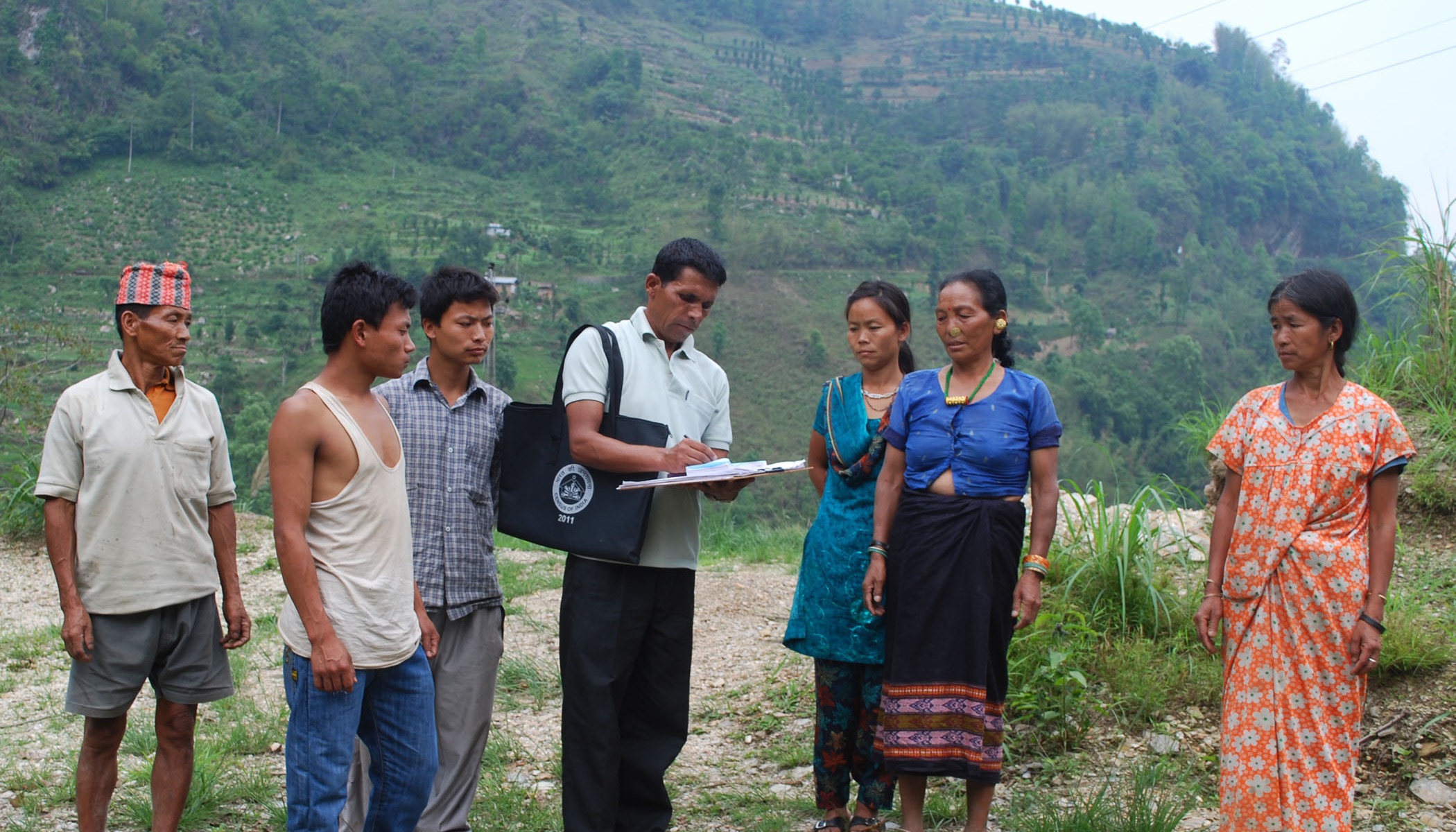
Between July 6 and July 20, 2026, the Registrar General’s office ran a 15-day pre-test across 16 states and union territories, trialling what officials called an “open column” for the caste question: rather than select from a pre-compiled list of recognized caste names, the way the 1931 census did and the way most administrative caste data collection still does, a respondent outside the Scheduled Caste and Scheduled Tribe categories would simply state their caste, in their own words, to the enumerator. SC and ST respondents kept the existing coded system tied to their constitutional status; everyone else got a blank field.
The pre-test’s actual results, how respondents answered, how much variation enumerators recorded, how hard the raw answers would be to code into a usable dataset, still have not been made public, and officials have said only that the findings are under analysis. But the government did not wait for a public verdict before deciding. On August 14, 2026, the Ministry of Home Affairs notified the open-column method as the official approach for Census 2027, fixing it as question 10 of a finalized 40-question household schedule. The design question that mattered most, whether to ask or let people answer freely, is now settled as a matter of policy, even though how well it actually performed in the field this July is not yet public information.
The calendar: who gets counted, and when
Census 2027 runs in two phases, and the caste question belongs to the second one.
Phase I, houselisting and housing data, covers the basic count of dwellings and amenities rather than individual caste identity. Nationally, it runs in a window the Centre has set from April 1 to September 30, 2026, with each state choosing its own 30 operational days inside that range. An optional 15-day self-enumeration period, filled in by the household itself through a digital portal, precedes the in-person, house-to-house version in each state’s chosen window — the “hybrid” design that makes Census 2027 the first Indian census built around digital self-response from the start, rather than enumerator visits alone.
Ladakh, and the snow-bound districts of Jammu and Kashmir, Himachal Pradesh, and Uttarakhand, run on their own separate and considerably earlier track, for a reason that has nothing to do with caste policy and everything to do with weather: winter snowfall makes the standard February enumeration window impossible in these districts, so they are counted months ahead of the rest of the country instead. Their self-enumeration window opens August 17 and runs through August 31, 2026. House-to-house enumeration follows from September 1 to September 30, with a five-day revisional round from October 1 to October 5, and a reference date of midnight, October 1, 2026 — the moment the count is officially anchored to, regardless of when an individual household is actually visited. Ladakh will also rely more heavily on paper schedules alongside the digital option, since defence installations along its borders with China and Pakistan cannot be geo-tagged for security reasons.
That makes Ladakh, an almost entirely non-SC/ST demographic context by national standards, the first place in independent India where the open-column caste question is actually asked in a live, official census, months before the rest of the country reaches Phase II. The rest of India’s Phase II, the population enumeration where question 10 gets put to every household nationally, carries a reference date of midnight, March 1, 2027.
What this does and doesn’t resolve
None of this schedule answers the harder question this magazine’s own coverage has already raised: what the state does with the caste data once it exists. A companion piece on this site has already tracked how the government’s manoeuvring around a failed delimitation vote suggests an appetite for counting caste without necessarily acting on what the count finds, and another has traced how 1931’s fixed caste list, built to make one census easier to tabulate, hardened over decades into the Scheduled Castes list independent India still governs by — a caution that applies as much to a fresh open-column count as it did to a fixed one. An open field does not eliminate classification; it only moves the first act of naming from the census officer to the person answering the door. Someone, eventually, still has to decide how thousands of self-reported answers get sorted into categories a government can use, and that sorting problem is precisely what produced 2011’s unreleased 46.7 lakh distinct caste names and a still-unpublished expert-committee report on what to do with them.
What the August 14 notification does settle, concretely, is the method and the mechanics: a blank field, not a fixed list, for everyone outside SC/ST; a hybrid digital-and-paper design; and a first live test of all of it in Ladakh this October, a full five months before the rest of the country answers the same question. Whether the answers that method produces get released, tabulated honestly, and acted on is a different test, and one this census has not yet had the chance to fail or pass.