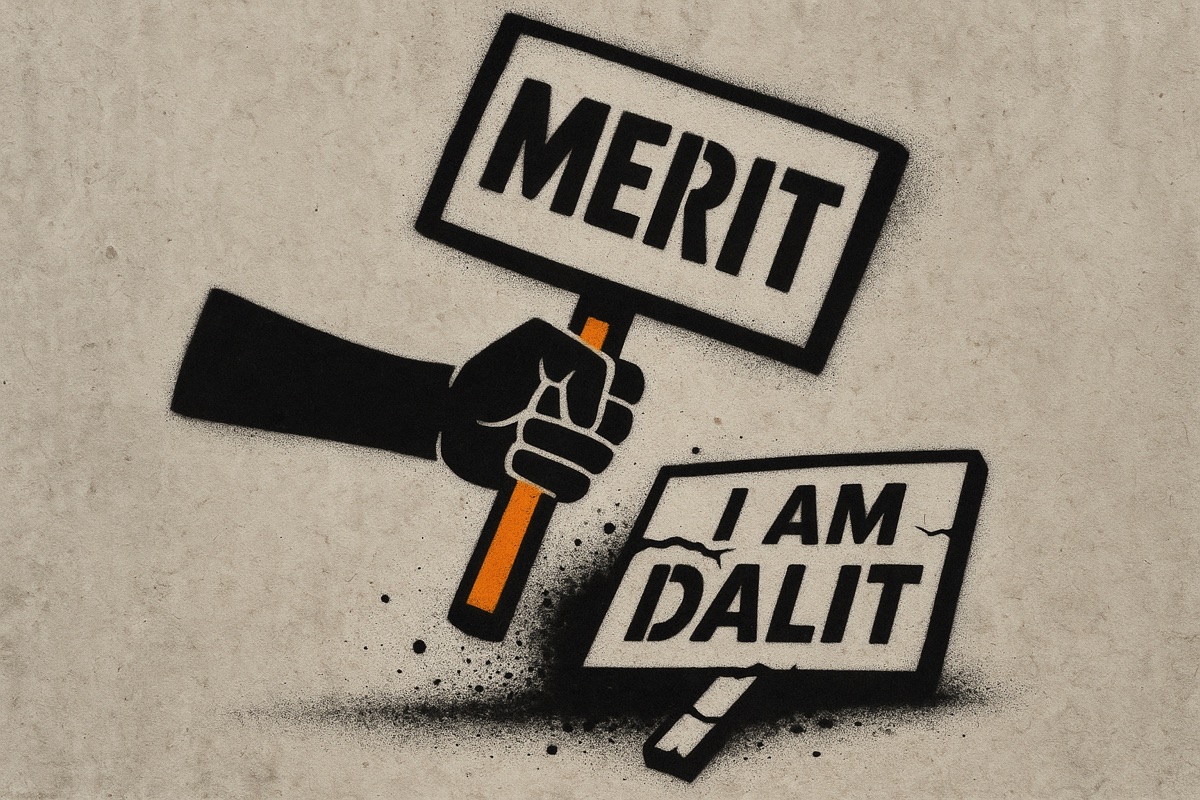
In May 2026, Wasim Akram Mondal, a 26-year-old history graduate from Nadia district in West Bengal, learned that his OBC certificate—the credential he had been counting on for civil service examinations—had been erased. Shahnawaz Molla, 27, who held a B.Ed degree and hoped to enter government teaching, faced the same shock. So did hundreds of thousands of others. On May 19, the Suvendu Adhikari-led BJP government announced a sweeping revision of West Bengal’s Other Backward Classes reservations:
The quota would be cut from 17 percent to 7 percent, and 77 communities—75 of them predominantly Muslim—would be formally removed from the OBC list. Approximately 5 lakh OBC certificates issued since 2010 would be nullified. For Mondal, Molla, and countless others seeking government jobs or professional education, these were not abstract policy shifts. They were the erasure of constitutional protections they had believed were theirs.
The government framed this reversal as constitutionally defensible. It was, it claimed, simply enforcing a May 2024 Calcutta High Court judgment that had struck down post-2010 OBC classifications as procedurally irregular. Read that judgment’s actual holdings, however, and a different story emerges. The court found that the state had granted OBC status almost entirely on the basis of religion—in violation of Article 16(4) of the Constitution, which requires OBC classification to rest on demonstrable social and educational backwardness. The state had conducted no rigorous surveys. It had bypassed its own statutory commission. It had issued certificates without public hearing. The court’s response was clear: these classifications were unconstitutional. But what happened next reveals something darker: a government using that judicial rebuke not to correct the violations, but to execute a political strategy.
West Bengal’s reservation history is essential to understanding what just occurred. The Mandal Commission recommended 27 percent OBC reservation in its 1980 report; it sat unimplemented for a decade until Prime Minister V.P. Singh moved to enact it in August 1990, triggering the national upheaval remembered from that year, including student self-immolations. The Supreme Court upheld the core principle in Indra Sawhney v. Union of India (1992) while setting constitutional guardrails: backward class identification must rest on “social and educational backwardness,” not on religion or communal logistics. Fourteen years later, M. Nagaraj v. Union of India (2006) refined this further, requiring rigorous, quantifiable proof of persistent underrepresentation in public employment before any community could claim OBC status.
When the Trinamool Congress came to power in West Bengal in 2011, it embarked on an expansion that bypassed those guardrails, adding 77 new communities to the OBC list between March 2010 and May 2012—overwhelmingly Pasmanda communities, Muslim castes historically excluded from both upper-caste Hindu dominance and from formal government recognition. The government claimed socio-economic backwardness; critics argued, and the Calcutta High Court confirmed, that religion was the organizing principle. By 2025, West Bengal’s OBC quota had ballooned to 17 percent, distributed across 183 communities.
Now, in 2026, the BJP has returned that quota to 7 percent and recognized only 66 pre-2010 communities. The mathematical result is that of the roughly 5 lakh certificates issued since 2010, nearly all are now worthless. But the political result is sharper: Muslim-led backward castes, who had finally won formal recognition after decades of exclusion from both upper-caste Hindu institutions and from Dalit constitutional protections, have been administratively erased.
This is not a neutral restoration of constitutional principle. West Bengal is not an isolated case: within days of the reclassification, BJP OBC Morcha president K. Laxman publicly demanded similar list revisions in Rajasthan, Punjab, Bihar, Telangana, and Andhra Pradesh, framing existing OBC inclusions there as “appeasement” of Muslim communities. That is the weaponization of caste enumeration for communal political gain, applied state by state. The BJP does not attack caste explicitly, since that would violate the rhetorical commitment to Ambedkar the party has cultivated. Instead, it fragments the OBC category into ever-smaller sub-units, using “merit-based” or “constitutionally sound” language to justify the disaggregation while rewarding politically useful castes and isolating others.
In West Bengal specifically, this strategy isolates Muslim communities from both the Hindu caste system’s patronage networks and from the constitutional protections that should shelter them. Subhajit Naskar’s recent analysis of the 2026 Bengal elections documents how despite record SC turnout, the major parties offered zero substantive commitments on caste violence or reservation policy, and how a long tradition of upper-caste intellectual dominance in the region has historically suppressed autonomous Dalit political assertion. The OBC cuts extend that suppression to Muslim communities, rendering them politically visible enough to extract votes but substantively voiceless in allocation of state resources.
One counterargument will be invoked: the government is merely enforcing constitutional law. The Calcutta High Court found violations. The 2024 judgment was correct. Why should unconstitutional classifications stand? This reasoning confuses compliance with constitutionalism. Yes, the post-2010 classifications were procedurally flawed. The remedy, however, was to correct the procedure—to order a fresh survey, to convene the statutory commission, to hear from affected communities, to ground new classifications in quantifiable data. Instead, the government has simply expunged the record. It has treated a procedural gap as justification for wholesale erasure. This is the logic of administrative punishment, not constitutional repair.
More fundamentally, it mirrors what Sukhadeo Thorat and Ashwini Deshpande have documented across Indian reservation policy: how neutral-seeming criteria—“merit,” “backwardness,” “procedural regularity”—function as masks for caste-based exclusion. The Mamata government’s inclusion process was corrupt; the BJP’s exclusion process is presented as neutral restoration. Both outcomes serve identical political purposes: one retained Muslim support through patronage, the other loses Muslim support through administrative elimination. The constitutional language of “merit” and “procedural regularity” provides cover for what is, in both cases, caste-based political calculation dressed as neutral administration.
The deeper issue, one that Anand Teltumbde addresses in The Persistence of Caste: The Khairlanji Murders and India’s Hidden Apartheid, is that caste hierarchy persists through constant redefinition. When one mechanism of exclusion becomes visible—when upper castes lose explicit control of reservation lists—the system shifts to a new mechanism. The OBC category itself was designed, after Mandal, to prevent precisely this: to create a large enough coalition of backward castes that no single upper caste could indefinitely dominate public employment. What is happening in West Bengal is the deliberate fracturing of that coalition through judicial permission and executive action, rendering each component group separately manageable.
Mondal, Molla, and the hundreds of thousands like them are discovering what Ambedkar warned the Constituent Assembly in 1949: that formal political inclusion without substantive redistribution of resources creates a peculiar form of subjugation. You are given the vote, the citizenship, the formal right to compete for government jobs. But the material mechanisms that translate those rights into actual opportunity are withdrawn. You remain visible to power only as long as your vote is needed. Once you are delivered, you become irrelevant.
The Calcutta High Court’s May 22, 2024 judgment was technically correct about procedural violations. But it has been weaponized into something its authors may not have intended: a template for systematic exclusion dressed in constitutional language. The May 2026 revision does not restore constitutionalism. It redistributes subordination. It tells Muslim OBC communities that their temporary inclusion can be revoked whenever judicial reasoning permits it. It tells Dalit communities in West Bengal that caste politics remains fundamentally about managing coalitions from above, not about building power from below. And it signals to the national project that caste census data, currently being collected in India’s Census 2027, the first with a caste count since 1931, will become a tool not of empowerment, but of ever-finer instruments of control.
The question West Bengal poses is not whether the Mamata government was wrong to expand OBC lists without proper procedure. It was. The question is whether the BJP’s response, fragmenting backward classes into smaller, politically manipulable units while preserving upper-caste structural advantage, is progress or merely the repackaging of caste hierarchy for a democratic age. The fate of Wasim Akram Mondal’s civil service aspirations hangs on that answer. So does the future of reservation itself.