On January 13, 2026, India’s higher education regulator notified new regulations to address systemic discrimination in universities. The University Grants Commission’s Promotion of Equity Regulations mandated that institutions establish equity committees, investigate discrimination complaints within hours, and protect students from caste-based, gender-based, and religious harassment. It was, in the narrow terms of institutional reform, thorough and procedurally sound. Sixteen days later, a bench led by the Chief Justice stayed the regulations, citing “complete vagueness” in how they defined caste-based discrimination — the clause covered only complaints by SC, ST, and OBC students, excluded the general category outright, and included no mechanism to penalize false complaints. The Court warned the gap could “divide society,” ordered the older 2012 rules to stay in force in the meantime, and referred the regulations to a committee of jurists for review.
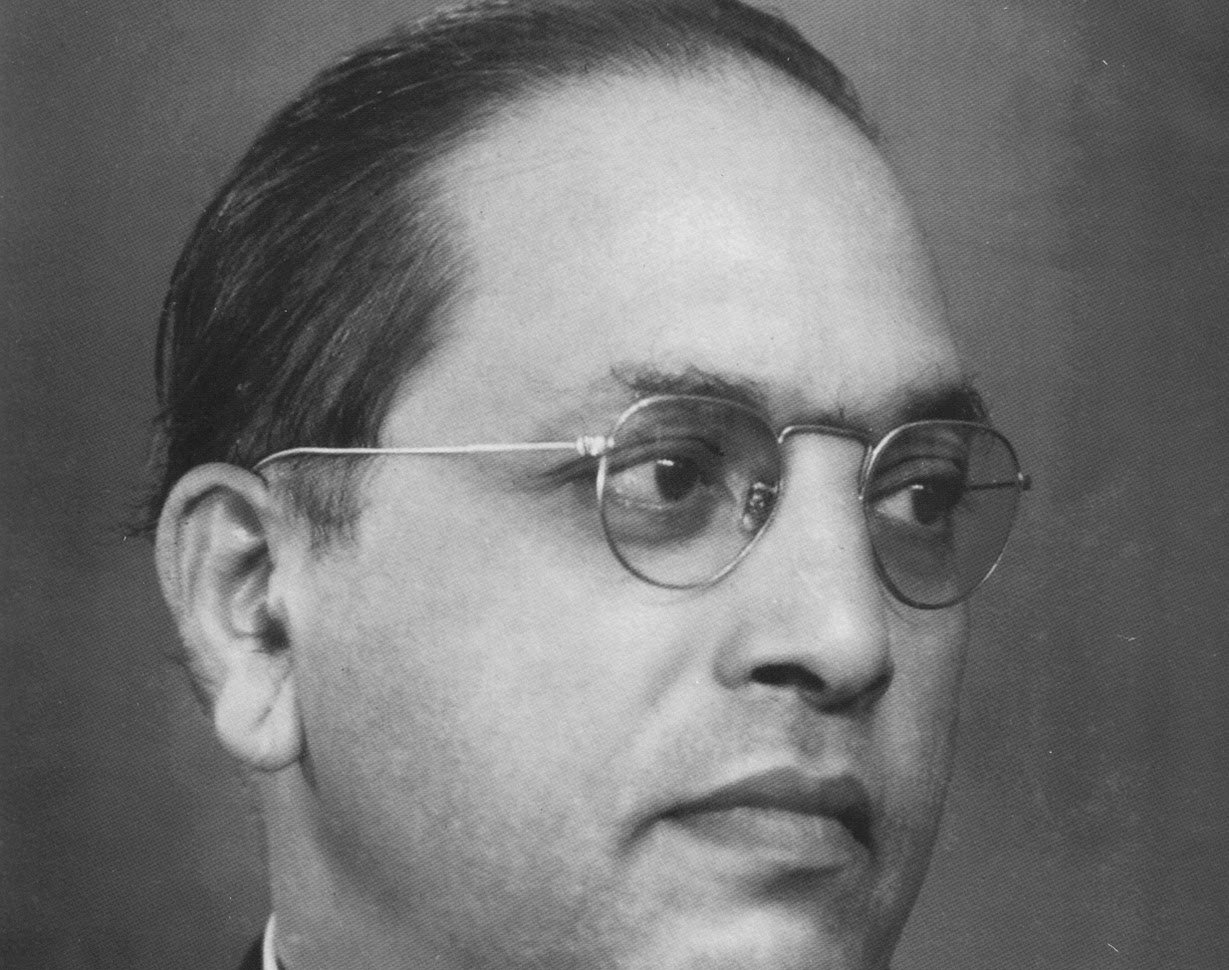
The Court’s intervention was judicial proof of a thesis that B.R. Ambedkar articulated ninety years ago: caste cannot be reformed because it is not, fundamentally, a problem of prejudice or ignorance. Caste is a structure—religiously sanctioned, institutionally embedded, reproduced through endogamy, and defended by every interest that benefits from graded inequality. Reform efforts fail not because they are poorly designed but because they treat symptoms while the architecture remains standing. When reformers try to add protections, the system simply reshuffles to defend itself. When courts try to enforce fairness, they discover that “fairness” itself can be weaponized to protect hierarchy.
The 2026 regulations were catalyzed by a tragedy: Rohith Vemula, a Dalit PhD scholar at the University of Hyderabad, died by suicide in January 2016 after his university systematically humiliated him for his Dalit activism. He was suspended from his hostel, barred from libraries and administrative buildings, cut off from his stipend. His death note read:
“The value of a man was reduced to his immediate identity and nearest possibility.” A decade later, with Vemula’s case still echoing through Indian campuses, the UGC finally tried to institutionalize what should have been obvious: universities should not destroy their Dalit students. The Court’s stay suggests that making this obvious is legally and constitutionally impossible—or at least, that saying it out loud is dangerous to the general category.
This should not be surprising. It is, instead, entirely predictable. And Ambedkar predicted it.
In Annihilation of Caste, his 1936 address that the conference organisers refused to let him deliver, Ambedkar distinguished sharply between two approaches to caste. Reformism treats caste as prejudice—a social practice maintained by ignorance, tradition, or moral failure. From this view, the cure is education, integration, and legal prohibition. Break down the taboos around inter-caste dining. Encourage inter-caste marriage. Prohibit untouchability. Gradually, prejudice erodes. Ambedkar rejected this as naive. To treat caste merely as prejudice, he wrote, was to catastrophically misunderstand what caste is.
Caste is not a prejudice. It is a system of graded inequality sanctified by religion and held in place by control over resources and reproduction. It works through endogamy—marriage restricted to one’s own caste—because endogamy ensures that ritual status, economic access, and social standing are inherited and sealed. It works through occupation because inherited labor binds people to the system across generations. It works through control of land and capital because economic dependence prevents exit. Most fundamentally, it works through endogamy, which Ambedkar identified as “the only characteristic that is peculiar to caste.” Brahminical texts sanctify endogamy as sacred duty; women’s sexuality is controlled to enforce caste boundaries; lower castes replicate the practice in their own hierarchies, multiplying the mechanism of their own subordination.
Because caste is structural, not merely prejudicial, reform that addresses prejudice while leaving structure intact is worse than useless. It creates an illusion of progress that strengthens the system by making it appear responsive while leaving its foundations untouched.
Consider the empirical record. Sensitivity training and diversity programs fail to reduce caste discrimination. A November 2024 study out of Rutgers University’s Social Perception Lab and the Network Contagion Research Institute, “Instructing Animosity: How DEI Pedagogy Produces the Hostile Attribution Bias,” found that exposing participants to anti-oppressive DEI materials on caste paradoxically increased hostile attribution bias and punitive attitudes rather than reducing them. The materials provided information but changed nothing structural. They did what reform always does: they circulated awareness while the hierarchy reproduced itself.
Or consider the IHDS Untouchability Module from 2011-12, which found that 27 percent of Indians openly admit to practicing untouchability. Untouchability was abolished by Article 17 of the Constitution in 1950. Constitutional protections exist. Yet the practice persists at scale. Why? Because untouchability is not an aberration from the caste system; it is the system working exactly as designed. Prohibiting untouchability without dismantling the religious and occupational structures that justify it is like banning racism while leaving white supremacy institutionalized in law and property.
Reserved constituencies exist but exercise limited substantive power. The analogy is stark: American Reconstruction created formal political representation for formerly enslaved people without transferring economic power or land, and the system quickly reverted to white rule. Similarly, Indian reservations provide formal representation without substantive control over the state apparatus, institutions, or economy. Dalits vote in enormous numbers but remain excluded from the institutions that governance shapes. Representation without power is window dressing for hierarchy.
West Bengal in May 2026 offered the clearest proof that caste is not reformed but only reshuffled. The ruling BJP government reduced OBC reservation from 17 percent to 7 percent and invalidated 77 communities from the reservation list, most of them Muslim communities that had been added by the previous government. This was reform working exactly as intended—for those at the top of the hierarchy. A predecessor government tried to expand the category of protected communities, treating reservation as a solution to exclusion. The new government reshuffled the list, removing the groups that the old government had added. Both governments invoked the same rules. Both governments claimed fairness and procedure. The structure—upper-caste control of the state apparatus—remained constant. What changed was merely which lower castes were temporarily granted access, and which were excluded. Caste itself reproduced itself through the mechanism of reform.
The same pattern repeats with every reform. Create anti-discrimination regulations and courts block them as “vague.” Add groups to reservation lists and successor governments remove them. Offer sensitivity training and bias increases. Prohibit untouchability and practice continues. Reform keeps failing for the same reason each time: caste is not a prejudice that reforms can dissolve. It is a structure that reforms defend.
One counterargument is practical: should we not pursue reforms while working toward structural change? Must Dalits wait for annihilation to be safe in university? The objection contains compassion. But it misses Ambedkar’s insight. Reforms that do not address the structural foundations of caste do not reduce oppression over time; they legitimize the system by appearing to address it. They create the sense that the system is responsive, that Dalit suffering is a solvable policy problem, that slow change is progress. Meanwhile, caste reproduces itself through the very mechanisms of reform. Endogamy persists. Economic segregation continues. The religious apparatus remains sanctified. Ambedkar’s later conversion to Buddhism was not a retreat from politics but a recognition of this: as long as the religious authority legitimizing caste stands, the system will reconstitute itself no matter what procedural reforms overlay it.
True annihilation would require what no reform can achieve: dismantling the religious texts that justify caste, transforming the institutions that reproduce it, ending endogamy by destroying the religious apparatus that enforces it, and redistributing land and resources so that economic dependence no longer binds people to the system. This is revolutionary, not reformist. It is structural, not procedural. It requires not better regulations but the destruction of the foundations on which hierarchy rests.
The Supreme Court’s stay of the 2026 regulations doesn’t set reform back. It proves reform was never going to be the answer. When a court can rule that protecting Dalit students is unconstitutionally vague, the lesson is not that we need better protections. The lesson is that protection within the existing structure is impossible. The structure must change.
Ambedkar understood this. He also understood that the vast majority of Indians, including many Dalits, would cling to the hope that reform could work, that sensitivity, law, and gradual change could dissolve a hierarchy that has sanctified itself for millennia. It is easier to believe in reform. Annihilation is harder. It demands not just policy change but the unraveling of the civilizational story that legitimizes caste. But the empirical record is now overwhelming: caste cannot be reformed. It can only be annihilated. And a system that blocks even the mildest reform—campus equity rules that try to prevent the humiliation and suicide of Dalit students—has signaled clearly what it will defend.