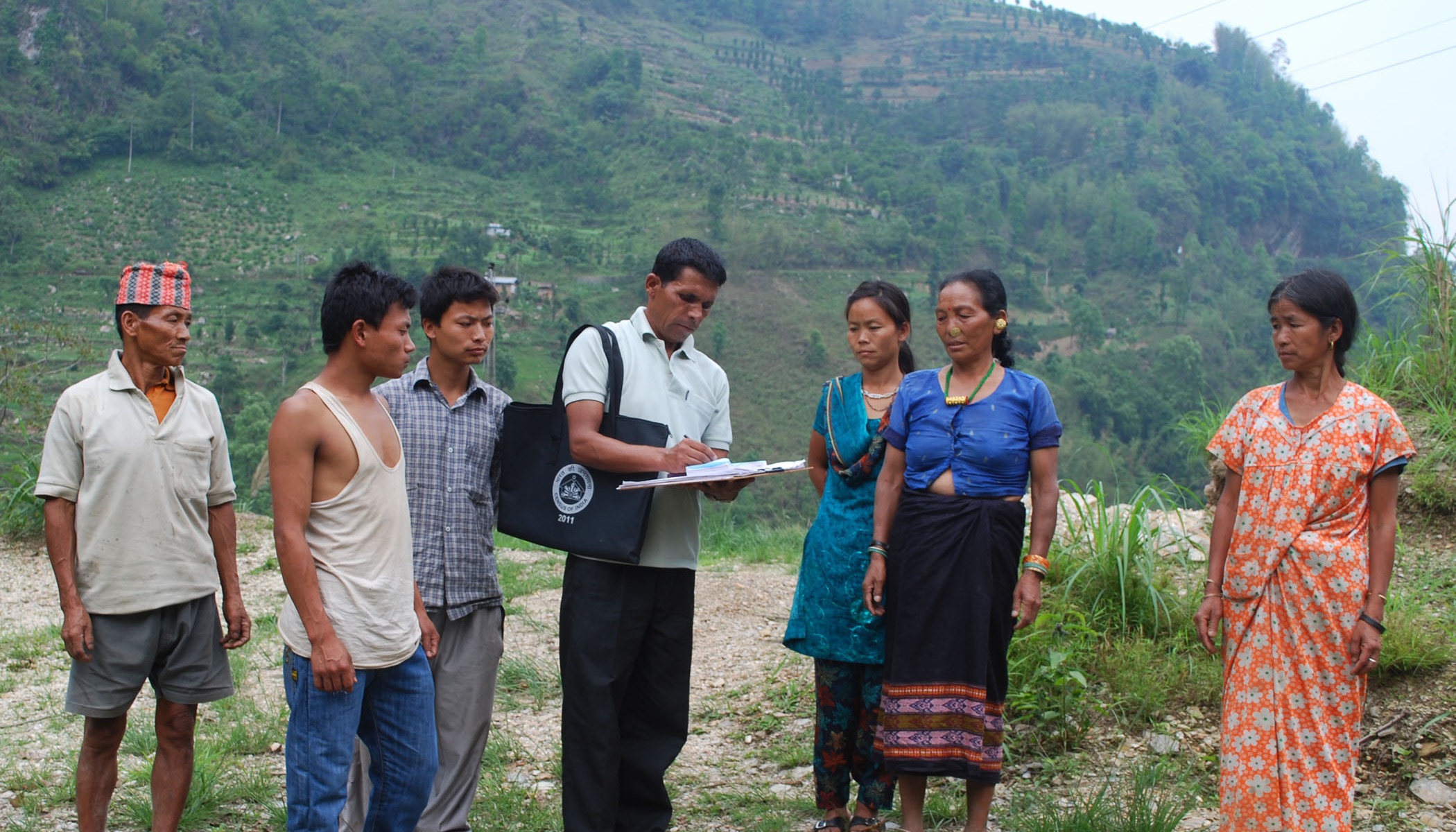
A 15-day pre-test running from July 6 to July 20, 2026, across 16 states and union territories trialled an “open column” method for recording caste ahead of the 2027 census, letting respondents self-identify their caste in their own words rather than select from a predetermined list. Dalits, the communities once branded “untouchable,” sit at the base of South Asia’s caste hierarchy, and how a census asks the caste question shapes, directly, who the state counts as belonging to which category, and therefore who qualifies for reservation and protection under law.
The comparison the pre-test invites is with 1931, the last colonial census to attempt a full caste count of British India’s population rather than restricting itself to Scheduled Castes and Scheduled Tribes alone. That census did not ask respondents to write in their own answer. It matched what people said against a fixed, pre-compiled list of caste names, built by census officials working from prior administrative and ethnographic records. The list was not neutral paperwork. It was itself an act of classification, deciding in advance which caste names counted as legitimate categories and which local, regional, or self-chosen names would be folded into a broader label the state found more administratively convenient. A category built to make counting easier does not stay confined to the census form once it exists. Colonial administrators used caste categorization for revenue assessment, recruitment, and social policy; the 1931 list of “Depressed Classes” became, under the Government of India Act of 1935, the base for the Government of India (Scheduled Castes) Order of 1936, the direct ancestor of the Scheduled Castes list independent India still governs by. A list drawn up to make one census easier to tabulate became, over decades, the basis for who could claim a constitutional protection and who could not.
That is the throughline the 2027 pre-test is implicitly arguing against. An open column does not eliminate classification. Someone, eventually, still has to decide how self-reported answers get grouped into categories usable for policy, the same problem 1931’s census officials faced when they built their fixed list in the first place. But it does relocate the first act of naming to the person being counted rather than the official doing the counting, which is not a small difference for a category with the administrative afterlife caste categories have had in India. The 1941 census collected caste data too, but the Second World War and pressure from upper-caste nationalists who saw caste listing as divisive to the independence movement meant it was never fully tabulated or published. Independent India’s 1951 census made the exclusion official, recording only Scheduled Caste and Scheduled Tribe status and dropping full caste enumeration entirely. The next attempt came in 2011: the Socio Economic and Caste Census collected open-ended caste responses, published its socio-economic findings in 2016, and then withheld the caste data itself, reportedly because the open-ended method returned some 46.7 lakh distinct caste names against the 4,147 the 1931 census had recorded — a gap a since-appointed expert group led by Arvind Panagariya was tasked with resolving, in a report that has never been released. A 2027 census that successfully collects and releases fuller caste data, by whatever method, would be the first since 1931 to attempt what 1931 attempted at all.
- 1931Census matches respondents against a fixed, pre-compiled list of 4,147 caste names — the state's first full caste count.
- 1935Government of India Act provides the legal basis for a Scheduled Castes list drawn from the 1931 list.
- 1936Government of India (Scheduled Castes) Order formalizes that list — the direct ancestor of independent India's SC list.
- 1941Census collects caste data again, but WWII and upper-caste-nationalist pressure mean it is never fully tabulated or published.
- 1951Independent India's census drops full caste enumeration entirely, recording only Scheduled Caste and Scheduled Tribe status.
- 2011The Socio Economic and Caste Census collects open-ended caste responses — 46.7 lakh distinct names returned — but the caste data is withheld and a Panagariya-led expert group's report is never released.
- Jul 2026A 15-day pre-test trials an open-column method, letting respondents write in their own caste name, across 16 states and union territories.
- Aug 14, 2026The Union Ministry of Home Affairs notifies the open column as official policy for Census 2027 — question 10 of 40.
Scheduled Caste and Scheduled Tribe respondents stay on their existing coded lists under the 2027 method; the open column applies to every other answer.
Source: Government of India Act 1935; Government of India (Scheduled Castes) Order 1936; Census of India records, 1931–2011; Union Ministry of Home Affairs notification, August 14, 2026. Compiled by The Dalit Project.
None of this guarantees the open-column method escapes 1931’s trap. On August 14, 2026, the Union Ministry of Home Affairs notified the open column as official policy for Census 2027 — question 10 of the finalized 40-question schedule, keeping Scheduled Caste and Scheduled Tribe respondents on their existing coded lists while recording every other answer verbatim. The pre-test’s own results still aren’t public, so how well the method performed in the field remains unknown. But the deeper problem was never the intake format. Any classification exercise conducted at national scale eventually needs stable categories to tabulate and to govern by, and a state that spent decades building law around a fixed list is not free of the incentive to fold self-reported answers back into that same list once the counting is done — which is exactly the sorting problem that produced 2011’s unreleased 46.7 lakh names and an unpublished committee report. Trina Vithayathil, the scholar behind Counting Caste: Census Politics, Bureaucratic Deflection, and Brahmanical Power in India, has argued the 2027 census needs to do more than just record who is oppressed by caste: it should document “the relational nature of caste including how caste privilege and power operate,” collecting caste data across every administrative category, “general” and OBC included, not only SC and ST — with anti-caste scholars and activists sitting on an oversight committee to keep the process from being quietly re-sorted back into the state’s own convenience once the counting starts. What the record from 1931 shows, unambiguously, is that the categories a census builds do not stay inside the census. They become the shape of the state’s later obligations, for better and for worse, and whoever writes the list first is making a decision that will outlive the count.