Every group formed to resist a hierarchy discovers, sooner or later, that it contains one. The recognition is uncomfortable wherever it arrives: in the coalition that speaks for “the workers” but is led by its most secure members, in the movement for a minority whose benefits accrue first to its already-advantaged tier. India has now had that recognition delivered by its highest court, about its largest protected category, and the reckoning it set off is instructive precisely because it cannot be resolved by pointing at an outside villain. The argument is internal.
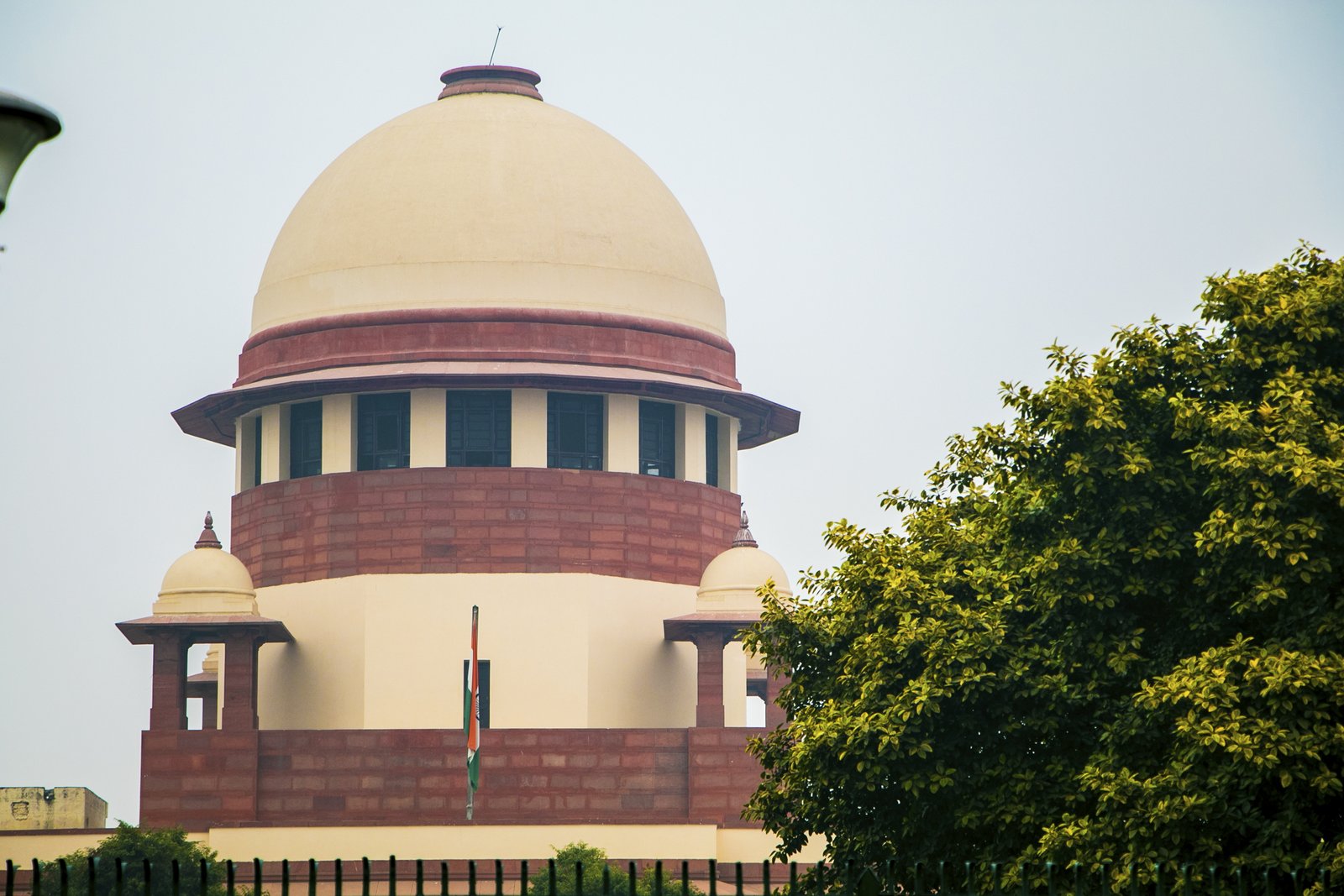
In August 2024, a seven-judge bench of the Supreme Court, by a majority of six to one, held that states are constitutionally permitted to sub-classify the Scheduled Castes (to treat that category not as a single undifferentiated bloc but as what it demonstrably is, a heterogeneous grouping of communities with sharply unequal outcomes) and to reserve a portion of the quota for the most backward among them. The Scheduled Castes are the constitutional designation for Dalits, the communities once branded “untouchable” at the base of South Asia’s caste hierarchy, roughly 200 million people. The ruling’s premise was simply that 200 million is too many, and too varied, for a single reservation to reach evenly; that some Dalit sub-castes had, over decades, become fluent enough in the machinery of quota to capture most of its benefit, while others remained locked out of the locked-out category.
Then the ruling stalled, in a manner worth watching, because the stall is itself the story. Alongside the main holding, Justice B.R. Gavai observed that the principle of a “creamy layer” (the exclusion of a category’s already-advantaged tier from its benefits, long applied to India’s Other Backward Classes) could in principle extend to the Scheduled Castes too, on criteria of its own. The Union government, led by Prime Minister Narendra Modi, moved quickly in the other direction: the cabinet asserted that no creamy-layer exclusion would apply to the Scheduled Castes or Scheduled Tribes at all. And through 2026 the court has declined to force the matter, reiterating that while its reasoning stands, the responsibility to legislate and implement rests with the legislature and the executive, even as it asks the Centre to file a response to petitions seeking exactly the criteria the cabinet has refused to draw. The judiciary has supplied a principle and withheld a command; the executive has supplied a refusal and withheld a reason. The excluded, meanwhile, wait on both.
The reflexive reading on much of the Dalit left is that sub-classification is a divide-and-rule manoeuvre: a way to fracture a large, electorally significant bloc into quarrelling fragments, congenial to dominant-caste interests that would prefer Dalit politics fragmented. That suspicion is not baseless; categories have been split for cynical ends before, and the timing and enthusiasm of some of sub-classification’s backers invite scrutiny. But the reading collapses if it is asked to explain the grievance underneath, because that grievance comes from within. Communities such as the Madigas in the south have argued for decades, with data, that a handful of numerically and educationally stronger Dalit sub-castes corner the bulk of reserved seats and jobs, leaving the poorest sub-castes formally included and practically shut out. Manda Krishna Madiga, founder of the Madiga Reservation Porata Samithi, has led that argument since the 1990s; when the ruling came, he called it the payoff of a fight three decades long:
“MRPS has been fighting for this categorisation for the past 30 years… We stood like a rock and continued our fight.”
Justice B.R. Gavai, who joined the majority and pressed hardest on the creamy-layer question in his own concurrence, is himself Dalit — the bench’s lead opinion was written by then-Chief Justice D.Y. Chandrachud, but Gavai’s presence on it undercuts the same reflexive reading from a different angle. To call the ruling simply an external attack is to side, in effect, with the sub-castes already doing well inside the quota, which is a position, but not the anti-caste one it imagines itself to be.
Here the analysis has to hold two things at once, which is the whole difficulty. Sub-classification can be a genuine instrument of justice for the most excluded and a tool available for cynical fragmentation, depending entirely on who wields it and how. The creamy-layer question sharpens the same double-edge. Excluding a Dalit elite from reservation could direct scarce benefit toward those who need it most, or it could become the thin end of a wedge used to argue, eventually, that Dalits who have “made it” no longer face caste at all, dissolving the case for reservation from inside. That second fear is why the Union cabinet’s flat refusal of any creamy layer for Scheduled Castes, superficially the protective position, is not straightforwardly so; and why some Dalit thinkers who want sub-classification are wary of the creamy-layer logic riding in behind it. The distinction that matters, and that neither the court’s ambiguity nor the cabinet’s blanket refusal has drawn, is between excluding the advantaged within a caste and pretending caste disadvantage ends with income.
For a global reader, the underlying dilemma is not exotic and not confined to caste. Any system that remedies group disadvantage must eventually decide whether the group is a single thing or a nested set of things: the debate over whether affirmative action should track race or class in the United States is the same argument in a different idiom, as is every dispute over whether a minority’s elite should still draw on remedies designed for its poor. The Indian version is unusually stark only because the numbers are so large and the internal gradations so old and so precisely documented.
The test of whether the 2024 ruling means anything is therefore concrete, and it is not the volume of the debate. It is whether a state legislates a sub-classification and implements it (with data on which sub-castes have been under-served, and a transparent formula) such that reserved benefit measurably shifts toward the most excluded Dalit communities within a fixed period. That test has begun to be run. Telangana and Haryana moved first, Andhra Pradesh followed, and on April 24, 2026, Karnataka’s cabinet, under Chief Minister Siddaramaiah, approved its own formula: a 17 percent Scheduled Caste quota split into 5.25 percent for “SC Left” communities including the Madigas, 5.25 percent for “SC Right” communities including the Holeyas, 4.5 percent for Bhovi, Lambani, and 59 other nomadic SC castes, and 2 percent held for “others,” clearing the way for roughly 56,000 government jobs to be allocated under the new formula. Four states acting is a real answer to whether the ruling would move at all. It is not yet an answer to whether it moves the way its authors intended: a public interest litigation is already before the Karnataka High Court, arguing the state’s own sub-classification law breaches the 50 percent reservation ceiling the Supreme Court itself has separately set, and none of the four states has yet published the kind of after-the-fact data, actual seats and jobs delivered per sub-caste, that would show the formula is reaching the most excluded rather than simply re-drawing lines. And on the creamy layer, the test is unchanged and still unmet: whether anyone in authority draws the one distinction that would make the exclusion defensible, a criterion that removes a genuine Dalit elite from a specific benefit without conceding that their caste has stopped operating. The Union cabinet’s blanket refusal to apply any creamy layer to the Scheduled Castes still stands, so that half of the ruling remains a door the court opened and the executive has bolted from the far side.
The forces underneath will not resolve themselves into agreement. Intra-Dalit inequality is real and rising as some sub-castes consolidate the gains of two generations of reservation while others do not; the electoral incentive to either unify or fracture the Dalit vote shifts with each cycle; and the creamy-layer argument, once introduced, is not easily contained to its narrowest use. A category of 200 million was always going to strain against its own internal differences. Four states have now written a formula down rather than leaving the ruling a principle admired in the abstract; whether any of those formulas survives its own court challenge, and whether the benefit they promise actually reaches the most excluded rather than the sub-castes already best positioned to claim it, is the argument’s next test, not its resolution.