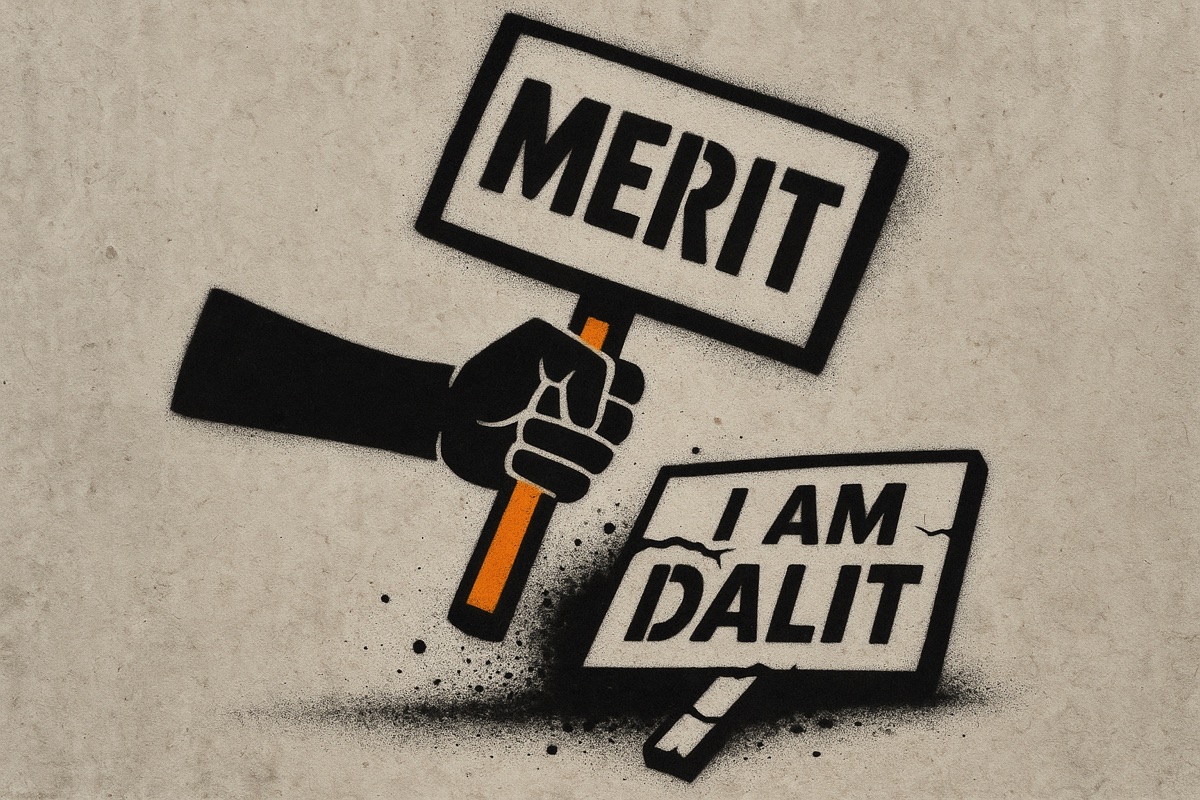
Of 121 leadership positions across India’s major newsrooms, zero are held by someone from a Scheduled Caste or Scheduled Tribe. Not low representation. None. That’s the finding Oxfam India and Newslaundry published in 2019 and confirmed again in a 2022 follow-up, the same structural pattern sustained across print, television, and digital media for over a decade of tracking.
The instinct, when a number like that gets reported, is to call it a pipeline problem: not enough Dalit and Adivasi journalists coming up through the ranks yet, give it time. The same reporting makes that framing impossible to sustain: three out of every five bylines in Hindi and English newspapers already go to General-caste writers, while Scheduled Caste, Scheduled Tribe, and OBC writers combined produce roughly one in five. Three-quarters of anchors on flagship television debates are upper-caste; not one is Dalit, Adivasi, or OBC. The leadership numbers aren’t an anomaly sitting on top of an otherwise-representative industry. They’re the top of a structure that’s unrepresentative at every single level being measured — which means there’s no pipeline to wait on. The industry isn’t behind schedule. It’s built the way it’s built.
The pipeline itself isn’t even where the loss happens. India’s top journalism schools have enrolled SC/ST students at rates the newsroom-leadership numbers make no sense against: roughly 20% of IIMC Delhi’s English-course intake and 13.5% of AJK Mass Communication Research Centre’s between 2008 and 2013. And yet a 2013 count found only 21 identifiable Dalit journalists across the whole of Indian broadcast and print media. The leak isn’t at the classroom. It’s at the door. Media commentator Sevanti Ninan has put the mechanism plainly: “hiring in media is informal.” Dalit intellectual Chandrabhan Prasad has said the same thing from the applicant’s side: “to get into media one needs contacts, recommendations, references and good networks.” A newsroom that recruits this way while calling it merit is describing accumulated caste capital in the language of individual talent — sociologists Surinder Jodhka and Katherine Newman’s own study of Indian hiring found kinship, regional stereotype, and caste doing work alongside qualifications, not standing outside the process politely waiting to be corrected for.
Digital newsrooms are a partial exception: SC representation there has risen from zero to roughly 11%.
Source: Oxfam India & Newslaundry, 2019/2022; IIMC Delhi and AJK MCRC enrollment data, 2008-2013.
What that leadership gap controls isn’t symbolic. Editors and leadership decide what gets covered, which stories get resources and follow-up, which framings get challenged before publication, and whose expertise gets treated as authoritative when a caste story runs. Sumit Chauhan, an Ambedkarite journalist who worked at several national TV newsrooms before founding the independent outlet The Shudra, has described exactly this: story ideas on caste that got quietly dropped, promotions that didn’t come, and — after he pushed to cover the 2016 Una flogging case — a senior producer telling him that Dalits like him needed to be kept in check or they’d get “spoiled.” That is not a stray insult sitting outside the industry’s structure. It’s what the structure sounds like when a Dalit reporter tries to use it for the purpose it claims to exist for. A newsroom that is 90% General-caste in its leadership produces the euphemisms mainstream caste coverage runs on as a matter of course, not as individual writers’ style choices: “clashes” instead of caste violence, “backward classes” instead of Dalit, “sensitive issue” instead of naming the structure. That is what this leadership composition produces by default, and it is also, per Chauhan’s account, what it actively enforces against anyone inside it who tries to file something else.
There is a complication here, and it deserves stating plainly rather than folded into a flat “nothing has changed” story: digital media outperforms print and television on this specific measure, with Scheduled Caste representation in digital newsrooms rising from zero to roughly 11% and Scheduled Tribe representation to roughly 3% across the periods measured. That’s genuine movement. But a rise from zero is still a small number, and it says nothing yet about whether that presence extends to actual editorial and leadership authority, or stays confined to reporting roles further down the masthead. Progress at the edges of an industry is not the same thing as the center moving.
Indian media doesn’t need better outreach to Dalit journalism students. An industry organized this thoroughly around caste exclusion, at every level simultaneously, needs its editorial leadership to change hands — not more outreach programs that recruit people to report under a hierarchy that stays exactly where it is.